
Male Hanbok Explained: Jeogori, Baji and Durumagi in Plain English
 AI-generated image
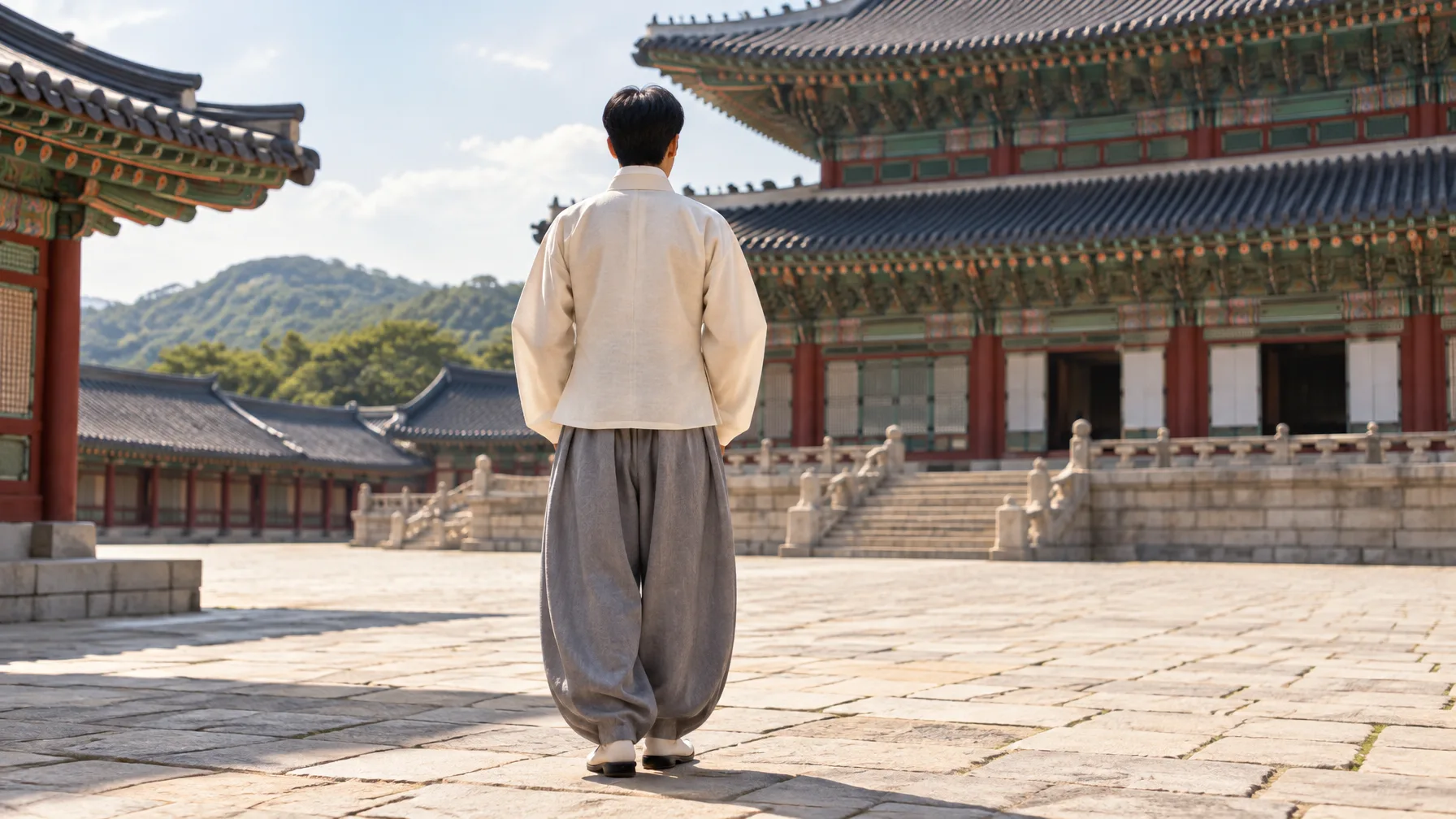
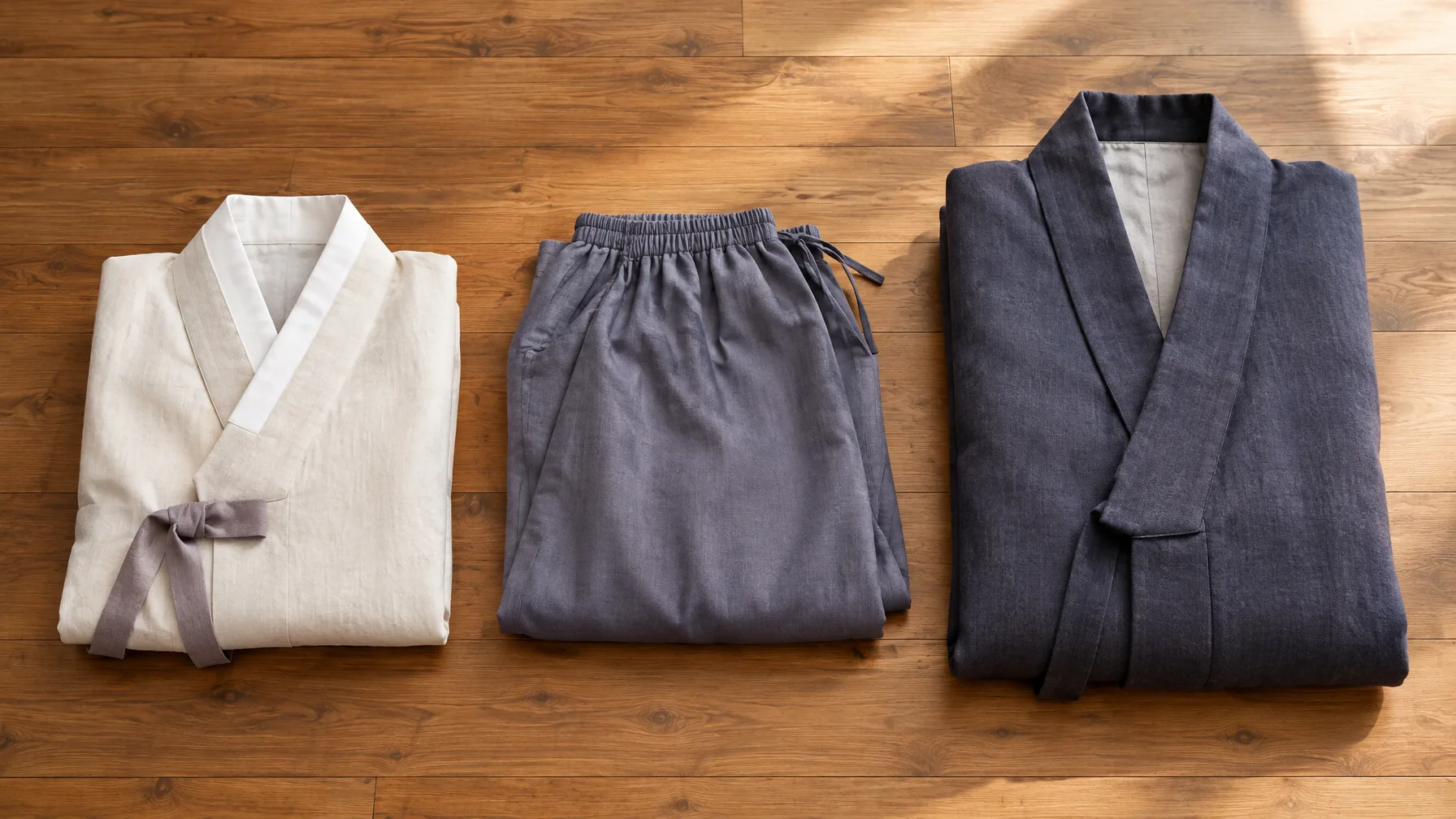
A male hanbok is made of a jeogori (jacket) and baji (loose, roomy pants). Men often add an outer coat such as a durumagi over them for warmth. You can think of the full set as a hanbok suit built in layers. It goes top, pants, then a coat when the weather asks for it. As for what a male hanbok is called, the outfit is simply hanbok, and each piece has its own name. Learn those names and a photo of a man in hanbok stops looking like a puzzle.
Jeogori jacket, baji pants, durumagi coat: the whole outfit in three words
 AI-generated image
The jeogori covers the upper body, and the baji cover the legs with plenty of room to spare. A durumagi goes over both when you need warmth.
Men wear hanbok too, from palace visits to wedding robes
 AI-generated image
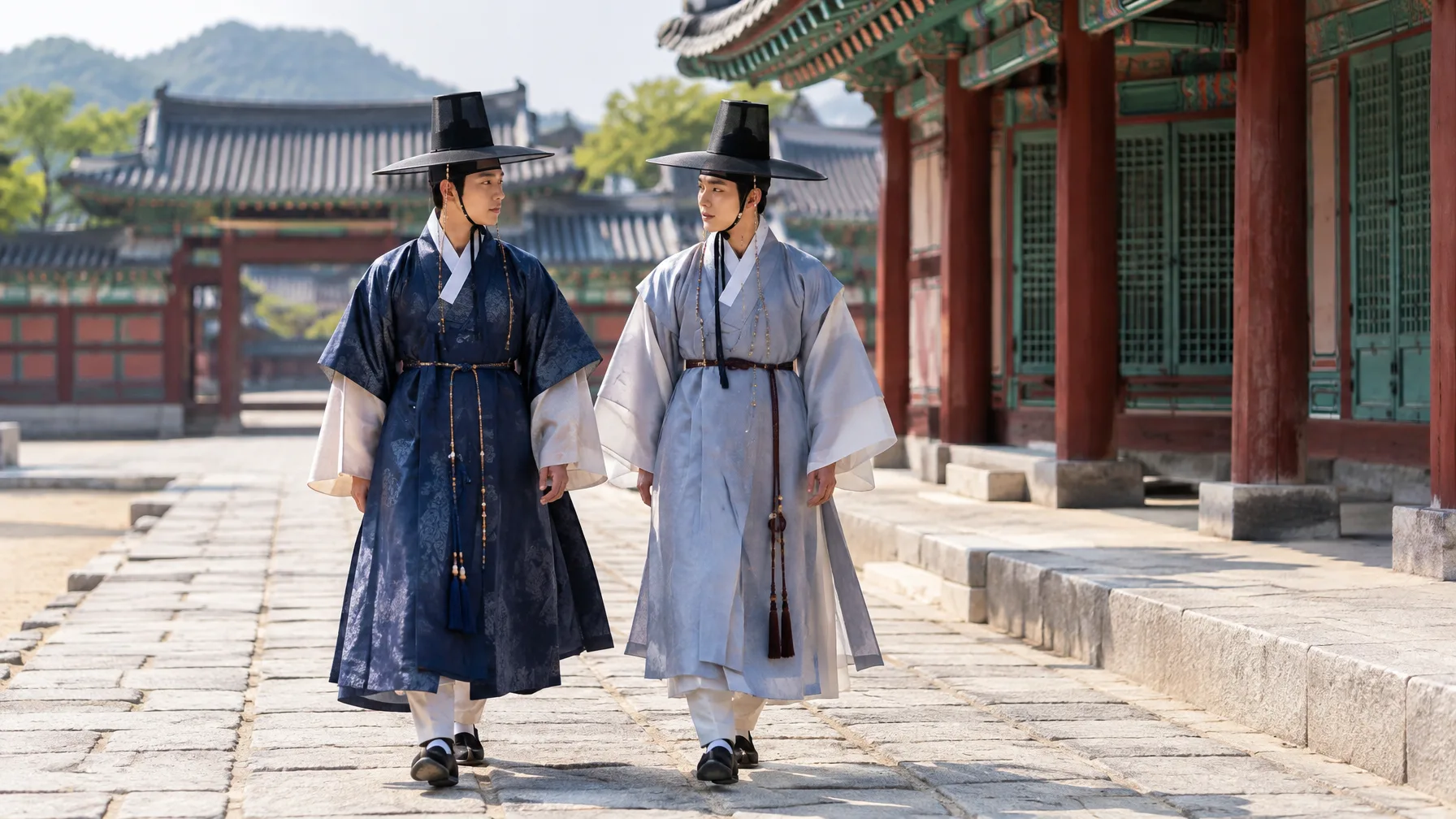
Hanbok isn't only for women. Walk around Gyeongbokgung palace and you'll notice men in hanbok as well, some of them wearing a traditional gat hat.
Weddings are another place to look. Traditional wedding dress such as the hwaot and the danryeongpo shows up in photos of couples.
Baji are roomy because they were made for sitting on the floor
 AI-generated image
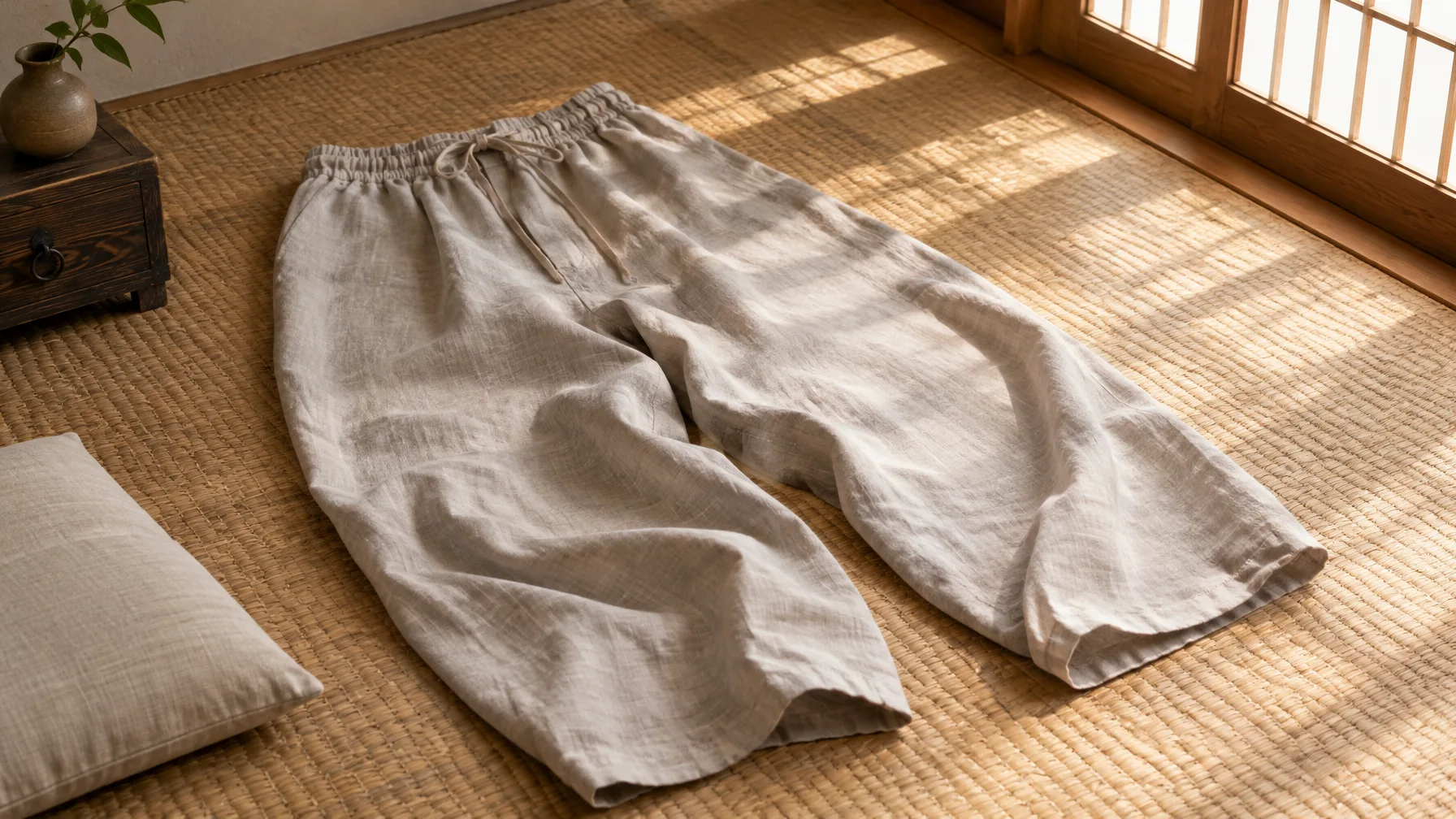
Baji don't hug the body the way Western trousers do. The generous cut suits floor seating, meaning sitting directly on the floor instead of in a chair. Loose legs are simply easier to fold under you when you sit that way.
The roomy shape isn't a modern fashion choice, either. It's an ethnic Korean style that goes back to the Three Kingdoms period.
Durumagi, magoja and gat: what each piece does
The durumagi is a type of po, the Korean word for an outer robe, made to keep out the cold. It was widely worn over the jeogori and baji. Plenty of other men's outer layers exist, but this is the one most people mean when they say coat.
| Piece | What it is | What it does |
|---|---|---|
| Jeogori | Jacket | Covers the upper body and is the top half of the base outfit |
| Baji | Loose, roomy pants | Cover the legs with a loose cut instead of a fitted one |
| Durumagi | Outer coat, a type of po | Goes over the jeogori and baji to block the cold |
| Gat | Traditional hat of bamboo and horsehair | Finishes the look from the head down |
The gat has a modern spin too: adult-size foldable gat hats are now sold as part of modern hanbok.
A modern shirt is the cheap way in; full sets cost several times more
Online listings for modern men's hanbok show a spread of prices. Shirts sit at the low end. Sets with a jeogori top and baji pants cost more, and some named sets carry a markdown from their list price.
| Item | Listed price |
|---|---|
| Black Linen Modern Hanbok Shirt | From $154.00 |
| Solid Modern Hanbok Shirt in Green | From $165.00 |
| Navy Layer Line Modern Hanbok Shirt | From $187.00 |
| SaeByeok Glow Pattern Shirt (six colors) | $200.35 |
| Baji pants and Jeogori top | $500.00 (list price $700.00) |
| Daewon set | $1,200.00 (list price $1,500.00) |
| Jimin set | $1,500.00 (list price $1,900.00) |
Shirts aren't the only option. Listings also include a top-and-pants outfit and a three-piece set with a long dopo (an outer robe) and pants. A white durumagi robe is also sold on its own in size L. An online marketplace shows 163 results for men's hanbok, and a few named sets, Joongi, Jiho and Chanwoo, show as sold out.
Modern versions turn up at weddings, family photos and cultural events
Modern men's hanbok collections are built from a hanbok jacket or outer layer, a shirt and pants. They can be made to your size. Shops pitch them for weddings and pyebaek (a traditional wedding ritual). They also pitch them for cultural events, family photos and other special days. A male hanbok for a wedding is the clearest example of where the modern kind fits.
There's a casual side too. Photos cover everyday hanbok, fashion, fusion and trends. Shops sell items like a unisex Modern Hanbok Knot cotton sweatshirt in sizes S to XL. Chuseok family photos and matching couple sets with gat hats also turn up in image searches.
Western suits pushed hanbok out of daily life
From the late 19th century, hanbok was largely replaced by Western-style suits and other newly arrived clothing. Today everyday wear and formal wear are mostly Western. Hanbok no longer fits daily life and is worn for particular occasions instead.
Not every coat is a durumagi, and old hanbok wasn't all bright color
Calling every outer layer a durumagi is the most common slip. Men's outer garments include the durumagi, dopo, danryeong-ui, jungchimak, sochangui and daechangui.
Another assumption is that old hanbok was always colorful. Under status rules, commoners could only wear cotton and had to wear white. Other colors were saved for particular events.
Last, don't assume the men's and women's magoja match. A men's magoja has its buttons on the right, and a women's has them on the left. The men's version is also longer and open at the lower sides.
Jacket, pants, coat: the short version to remember
These days a men's hanbok mostly appears at weddings and cultural events. Modern hanbok shirts in online listings start at $154.00.
Comments
No comments yet.