
Best eSIM for South Korea Unlimited Data: Korea eSIM
 AI-generated image
Korea eSIM on SK Telecom is the pick for truly unlimited data
 AI-generated image
Which eSIM is best for a trip to South Korea? Of 23 eSIMs from 21 providers tested, Korea eSIM, SK Telecom's local eSIM, came out best, with the fastest 5G response time (35 ms) and truly unlimited data with no fair-use cap. Ubigi was the pick for travelers using up to 25 GB.
Staying connected is one of the trickier parts of a Korea trip. Free Wi-Fi spots are much rarer than in many other Asian countries, so most visitors want data the moment they land. An eSIM lets you buy a plan online and install it before you fly, with no SIM card swap at the airport.
How we compared: network, data cap, speed and phone number
 AI-generated image
Four things separate one Korea eSIM from another: the network it runs on, whether the "unlimited" label hides a daily cap, speed (both response time and download), and whether you get a Korean phone number or data only. We also looked at cost beyond the sticker price and whether your phone can use it at all.
Every Korea eSIM runs on SK Telecom, KT or LG U+
 AI-generated image
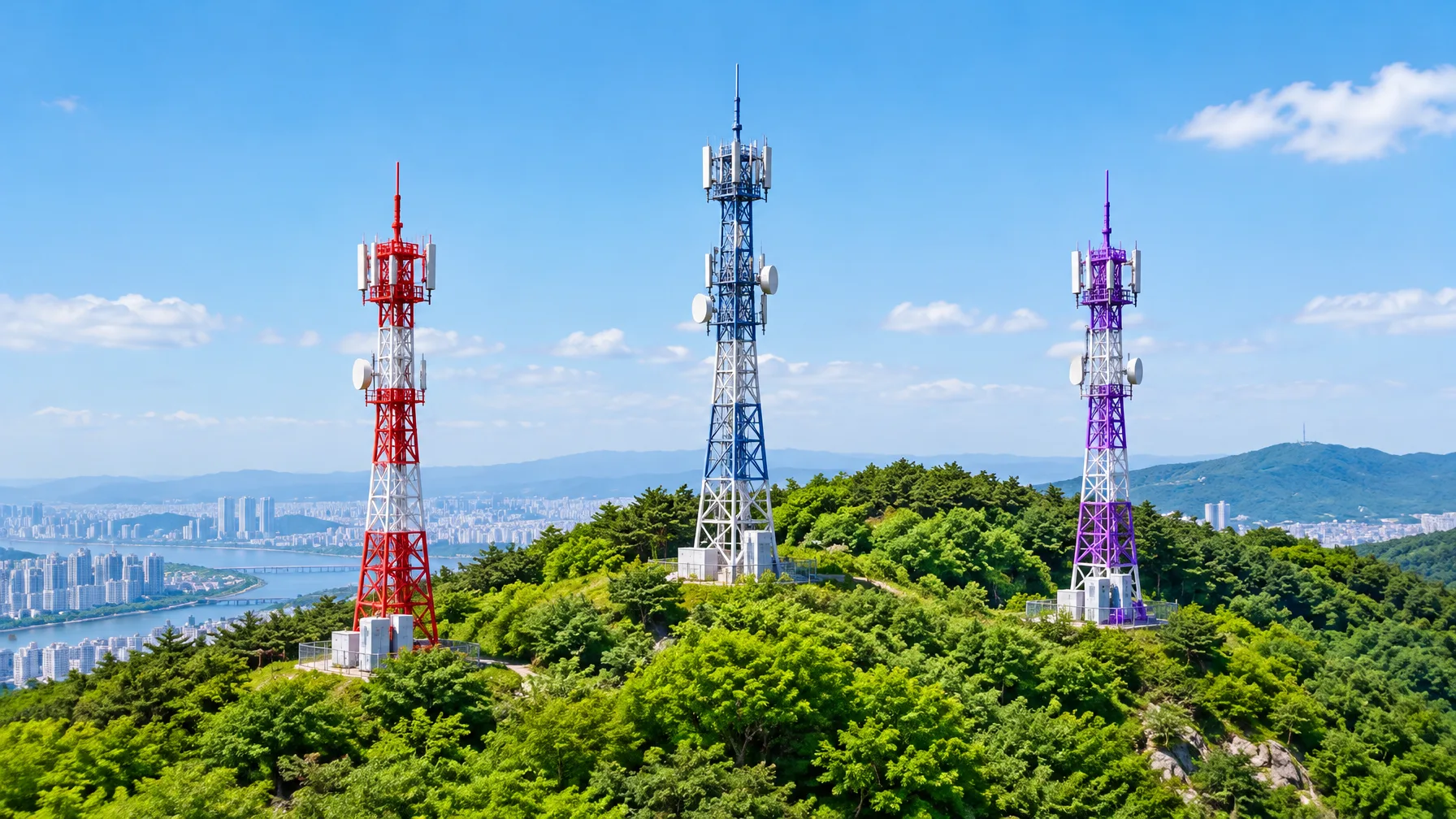
Korea has only three mobile networks: SK Telecom, KT and LG U+. Any SIM or eSIM you buy ends up on one of them. So the real question is which network your plan uses. Holafly's South Korea eSIM uses SK Telecom and LGU+. Ubigi supports 5G on both SK Telecom and LG U+. Jetpac uses SK Telecom and KT Mobile, which is why it suits travelers who care about network coverage.
SK Telecom holds up best on Jeju-do, but mountains stay patchy
On Jeju-do, SK Telecom performed noticeably better than KT and LG U+, so an eSIM that connects to it is the safer choice there. Coverage is wide in cities, towns and along main transport routes. On the way from Busan to Seoul, even stops in small towns stayed connected, mostly on strong 5G.
Hikers should plan for patchy or dropping service up on mountain trails. The same goes for national parks and far-off islands. Seoraksan, Jirisan and the mountainous interior of Jeju-do are cases in point. Travel eSIMs that depend on a partner network may also be shaky in the countryside.
What Holafly, Ubigi and Airalo cost
Holafly's South Korea plans run from $12.50 for 3 days to $73.90 for 30 days. The 15-day plan is about $50.50 and comes with a fair-use policy and a hotspot data limit. Ubigi's unlimited plan costs $34 for 15 days with no hotspot limit. Holafly's Always On benefit adds 1 GB of backup data a month in 70-plus destinations.
Airalo sits in between for lighter users. A 20 GB plan costs $29, and a 22-day plan came to a little over $55.
Side-by-side table: which pick fits which traveler
| Need | Pick | Why | Watch out for |
|---|---|---|---|
| Truly unlimited data | Korea eSIM (SK Telecom) | No fair-use cap, fastest 5G response (35 ms) | Check the 5G vs 4G option before buying |
| Up to 25 GB | Ubigi | 5G on SK Telecom and LG U+ | Unlimited plan is $34 for 15 days if you want no cap on volume |
| Budget | YonoSIM | Cheap, and it beat some premium providers | Network choice not specified |
| Multi-country Asia trip | Holafly regional plan | One eSIM for Korea, Japan, China and Southeast Asia | Fair-use policy and hotspot limit |
| Network choice | Jetpac | Uses SK Telecom and KT Mobile | Tested average about 100 Mbps down, 40 Mbps up |
| Sponsored or seller source? | Holafly pick: sponsored article. Airalo pick: Airalo's own blog. Trip.com and Kimchi Mobile picks: by the sellers. | Treat those rankings as interested claims. | Affiliate codes appear in some roundups. |
Which pick fits your trip
Heavy use can burn through well over 10 GB in a single day. On Korea eSIM's 4G version, speeds measured 106 Mbps down with 41 ms response, which is plenty good.
For lighter use, meaning maps, messaging and photos, Ubigi measured 804 Mbps down and 128 Mbps up in Seoul. Eskimo posted the fastest download in the test at 1,440 Mbps. If you tether a laptop, check hotspot rules first, since some plans limit tethering.
Your US phone should work, but you will not get a Korean number
Most US phones with eSIM support work fine, but support varies by model. iPhones sold for mainland China have no eSIM hardware, and some Hong Kong versions do not support it either. Carrier-branded Samsung phones bought in Korea can fail to activate a foreign eSIM even when the hardware supports eSIM.
Most travel eSIMs, Airalo's included, are data only, with no Korean number. That means no regular calls or texts, though WhatsApp and similar internet apps still work. Without a number you cannot use apps like Toss, Naver Pay or Kakao Pay.
A Korean number through a local SIM is a hassle for short stays. At SK, prepaid could not pass identity verification and postpaid needed at least 3 months. KT also required at least 3 months for postpaid. Visiting post offices for a cheaper MVNO plan can cost a full day. Some no longer offer it, and others only in the morning. For a trip of a few weeks, a data eSIM is the simpler path.
Setting up before you fly takes a few minutes
- Confirm your phone supports eSIM and is carrier-unlocked.
- Choose 5G or LTE when you buy. An LTE plan will not connect to 5G.
- Buy on the provider's website. A confirmation email and then a QR code email usually arrive within minutes.
- Scan the QR code on your phone.
- If you keep a physical SIM, set calls and messages to it and data to the eSIM.
- Install it before departure, since activation checks are easier at home.
Getting the eSIM by email beats picking one up in person, so arrival is quick. Korea also sends emergency disaster alerts to phones, so expect a loud alert at some point. Pair this with the guide on how to get a T-money card in Seoul. Check the K-ETA rules for US citizens before you book.
The real cost: caps, activation fees and the Korean SIM alternative
Sticker price is only part of it. Most "unlimited" plans in Korea slow down after about 3 GB a day. Some eSIMs also add a $1 to $2 verification fee at activation that is not in the listed price. And if the phone turns out to be incompatible, an administrative fee can still apply after booking.
Travel eSIMs are also rarely cheaper than a local physical SIM, and for a long stay in one place the local SIM wins. For a short trip, a no-cap plan avoids paying twice because you hit a daily limit. A cheaper plan only saves money if you stay under its cap.
What this comparison could not cover
Quality also depends on each brand's partner network, so results shift by provider. High mountain trails, national parks and remote islands are the weak spots, and this test did not measure them in detail.
Pick Korea eSIM, or Ubigi if 25 GB is enough
Pick Korea eSIM on SK Telecom for truly unlimited data, or Ubigi if 25 GB or less will do. Other "unlimited" plans mostly slow down after about 3 GB a day, and data-only eSIMs come without a Korean phone number. Install it at home and double-check 5G.
Comments
No comments yet.