
How to Plan a Hike in a South Korean National Park
Start with spring or fall, match the route to your stamina, and allow for seasonal conditions and crowds.
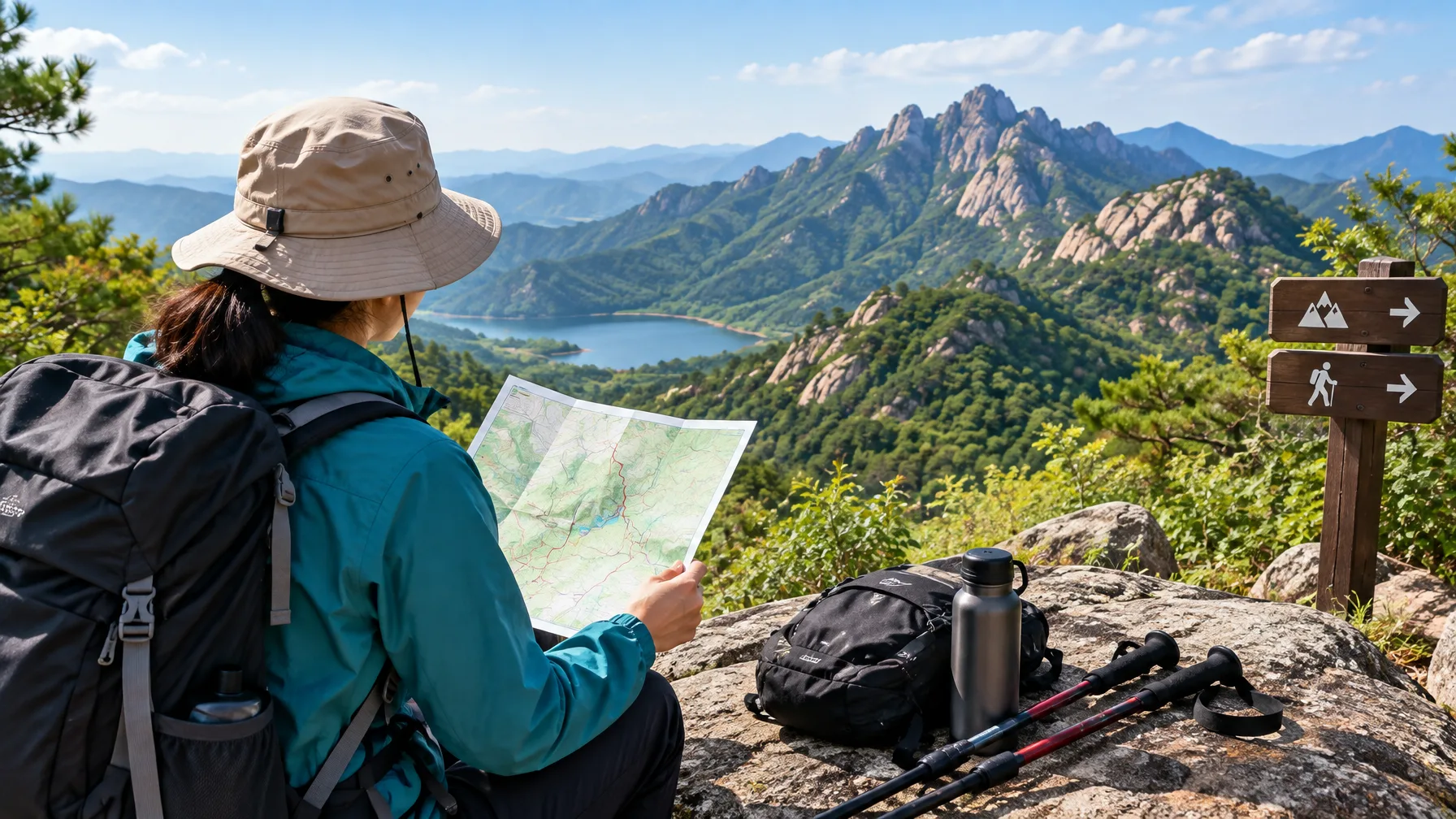 AI-generated image
Start with spring or fall, then choose the climb
 AI-generated image
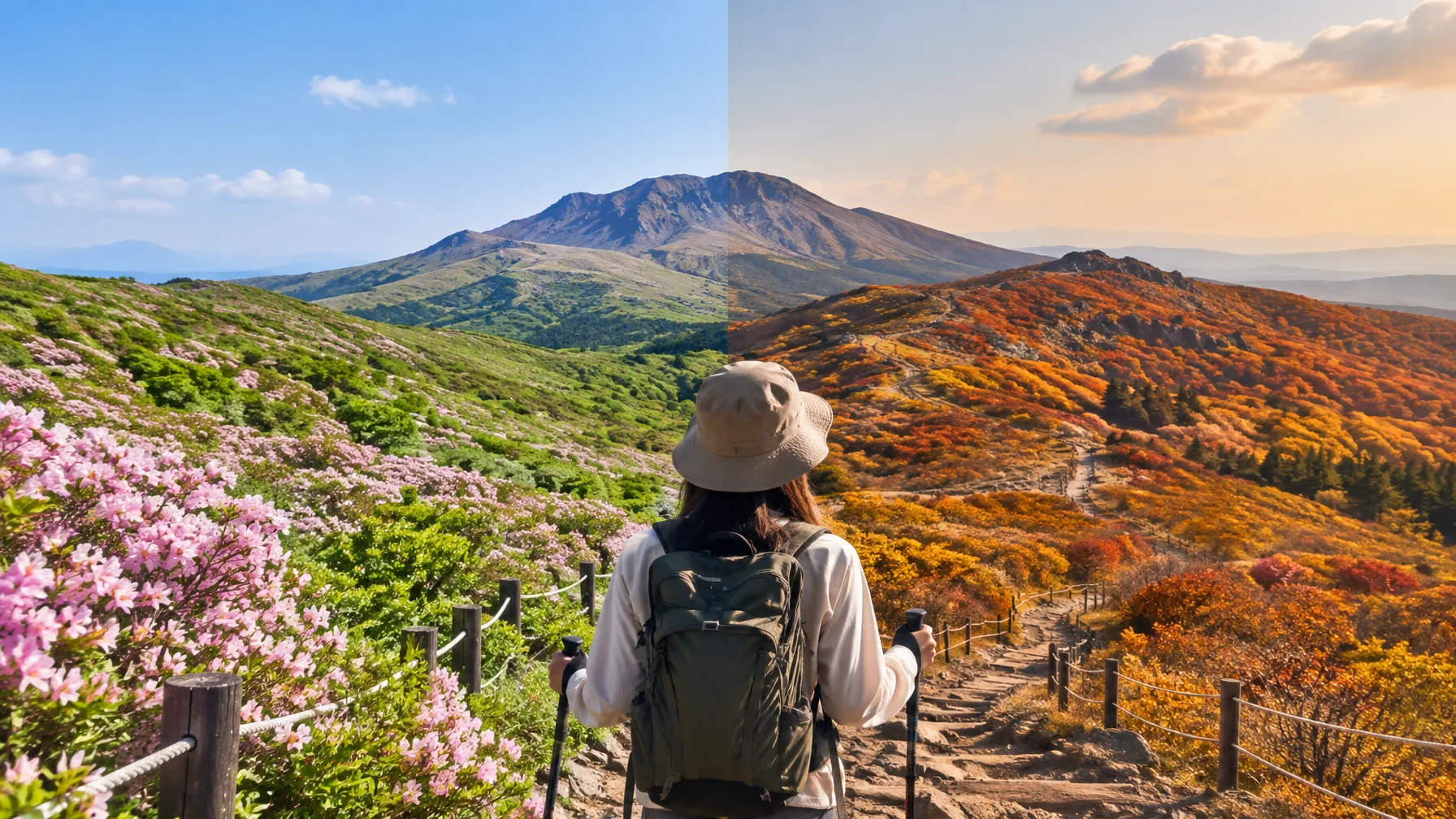
Start with spring or fall, match the route to your stamina, and allow for seasonal conditions and crowds. If your search starts with “national park korea hiking,” narrow it to a route before building your day around it. For Hallasan’s summit trail, reserve a climbing time through Hallasan’s official website.
A park name is not a route plan
 AI-generated image
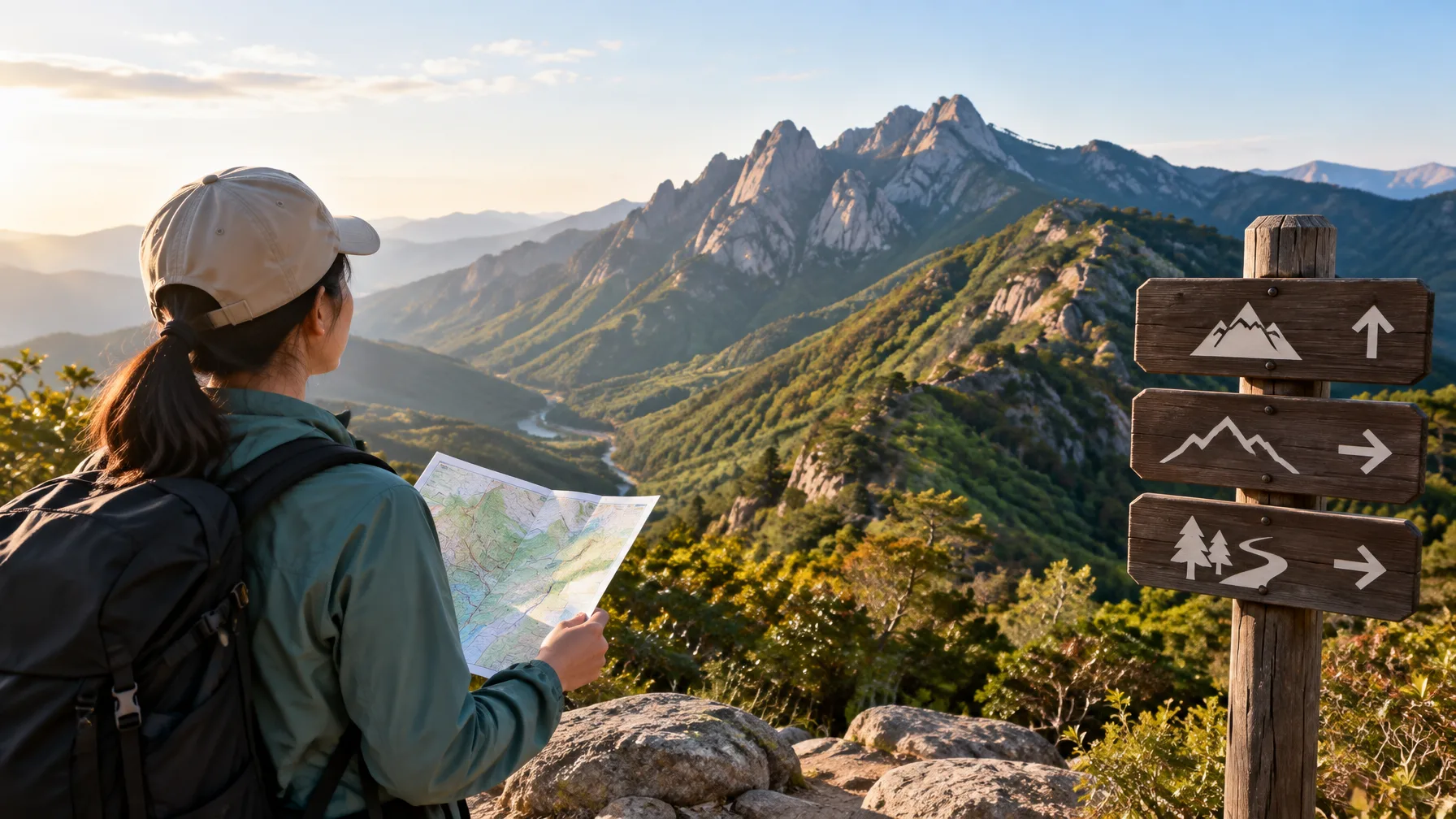
South Korea national parks offer very different hiking days. Seoraksan alone has several day-hike options. I would choose the kind of outing first: a summit goal, a ridge walk, or a less ambitious day. Then I would compare the actual route, rather than treating every hike in that park as interchangeable.
Bukhansan hiking taught me why that distinction matters. I lost my way a little and climbed several smaller peaks before reaching Baegundae. My hike took six and a half hours. Next time, I would settle the route before starting, not just put the summit name on my plan.
Turn a national park korea hiking search into a seasonal route plan
 AI-generated image
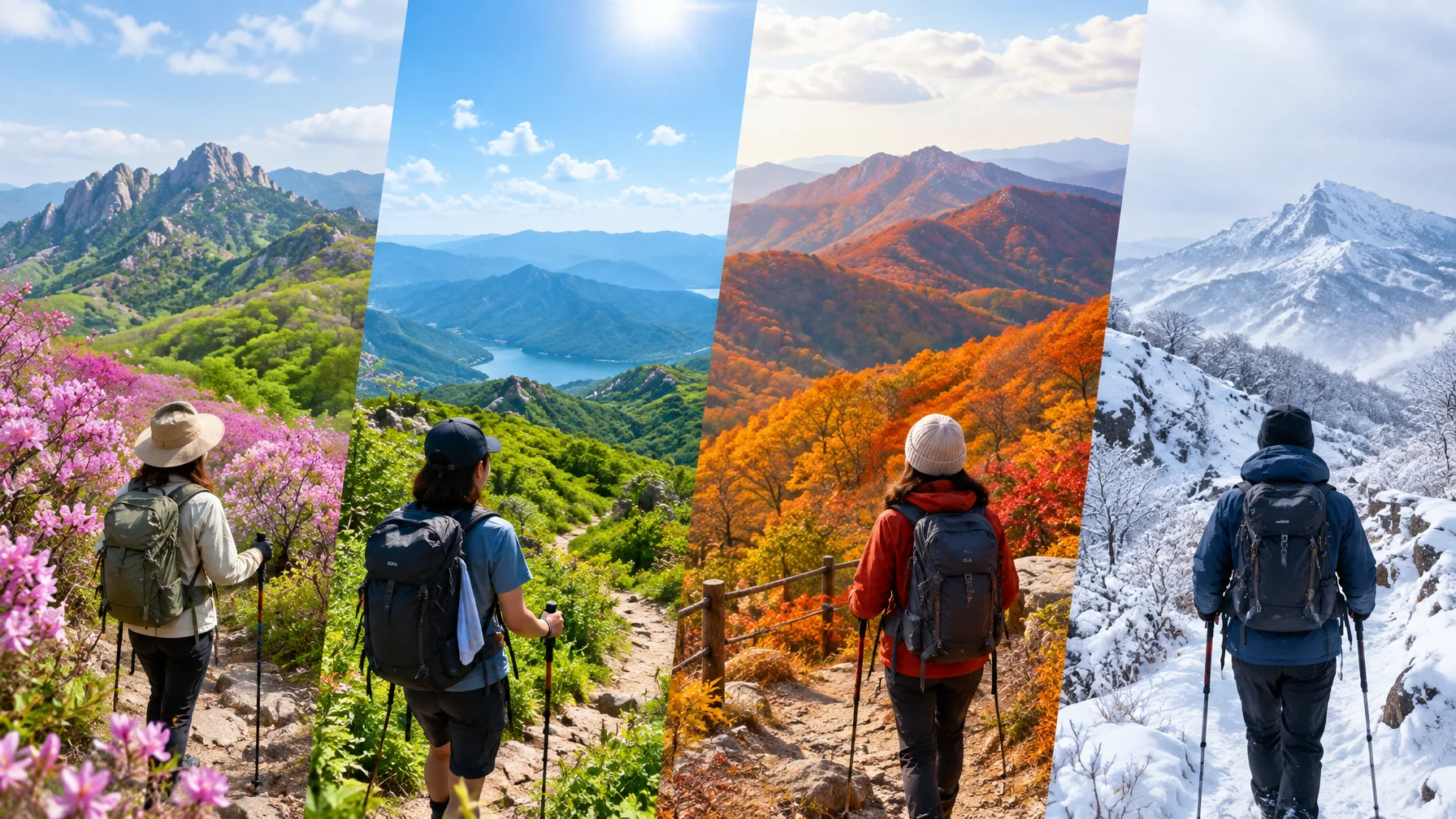
Spring and fall are good starting points for hiking in South Korea, not guarantees of an easy day. Korean hiking seasons change the demands of the same route. Winter hiking becomes much harder, especially at higher elevations. In summer, park temperatures often exceed 30 degrees Celsius. A long summit route deserves more caution in either season.
For a first hike, I would favor a route comfortably within my ability over one that tests my limit. In summer, I would scale back the distance and carry water rather than depend on finding it along the trail. I did not see drinking water on my Bukhansan hike. That is not proof that none exists, but it changed how I would pack.
Compare distance, direction, and the descent
The Daechongbong hike in Seoraksan spans more than 10 kilometers. It took my friend and me 10 hours. That is my experience, not a finish-time promise for you. I would treat it as a substantial hiking day, not squeeze it between other plans.
Juwangsan’s Gamebong Peak trail is about 7 kilometers one way. The words “one way” matter more than the number at first glance. Plan how you will finish the hike before deciding that the distance sounds manageable. Gyeryongsan offers a different route shape: Gwaneumbong Peak followed by the ridge toward Sambulbong Peak.
A Jirisan ridge traverse is a different commitment from a first-time day hike. Finishing it in two days requires 9–11 hours of hiking each day. A more relaxed traverse takes three days, and some ridge sections have few places to get water. Spring or fall does not remove those demands.
Build Hallasan around the reservation and both trailheads
The Hallasan summit trail is popular and often crowded. Reserve a climbing time through the official website as part of planning, not as an afterthought. One recommended route goes up Seongpanak and down Gwaneumsa. Since those are different trails, plan your arrival and your departure around different trailheads.
Leave room for a changed route and a crowded summit
At Naejangsan, I spent 20 minutes heading toward a blocked Kkachibong–Sinseonbong route. I switched to Yeonjabong–Janggunbong instead. Before departure, check current trail access and weather, and keep an alternative within your ability. My mistake was letting the original route become the only plan.
Bukhansan may not suit you if solitude is the main goal. Hikers gather near the summit, and narrow approaches can mean repeated stops. I waited more than two hours for a photo with the flag and stone marker. The sharp wind made that wait miserable. Next time, I would leave the photo optional rather than make it the reward for the whole climb.
A quieter trail is not automatically a better beginner choice
Popular trails can be crowded, while harder routes tend to draw fewer hikers. Do not trade a manageable hike for a harder one just to escape people. Also, do not treat someone else’s hiking time as your schedule. My Bukhansan route included wrong turns, and the summit photo queue added a separate decision about waiting.
Use Hallasan’s official website for the climbing-time reservation
Hallasan’s official website is the place to reserve your summit climbing time. Keep that step alongside your route choice, not separate from it. For a first trip, spring or fall is a sound starting point. Choose the challenge you actually want, then account for heat, winter difficulty, and possible crowd delays.
Comments
No comments yet.