
Gwangjang Market Street Food: What to Eat and What It Costs
Start your Gwangjang Market street food visit with bindaetteok at about ₩5,000 and mayak gimbap at about ₩4,000 a plate.
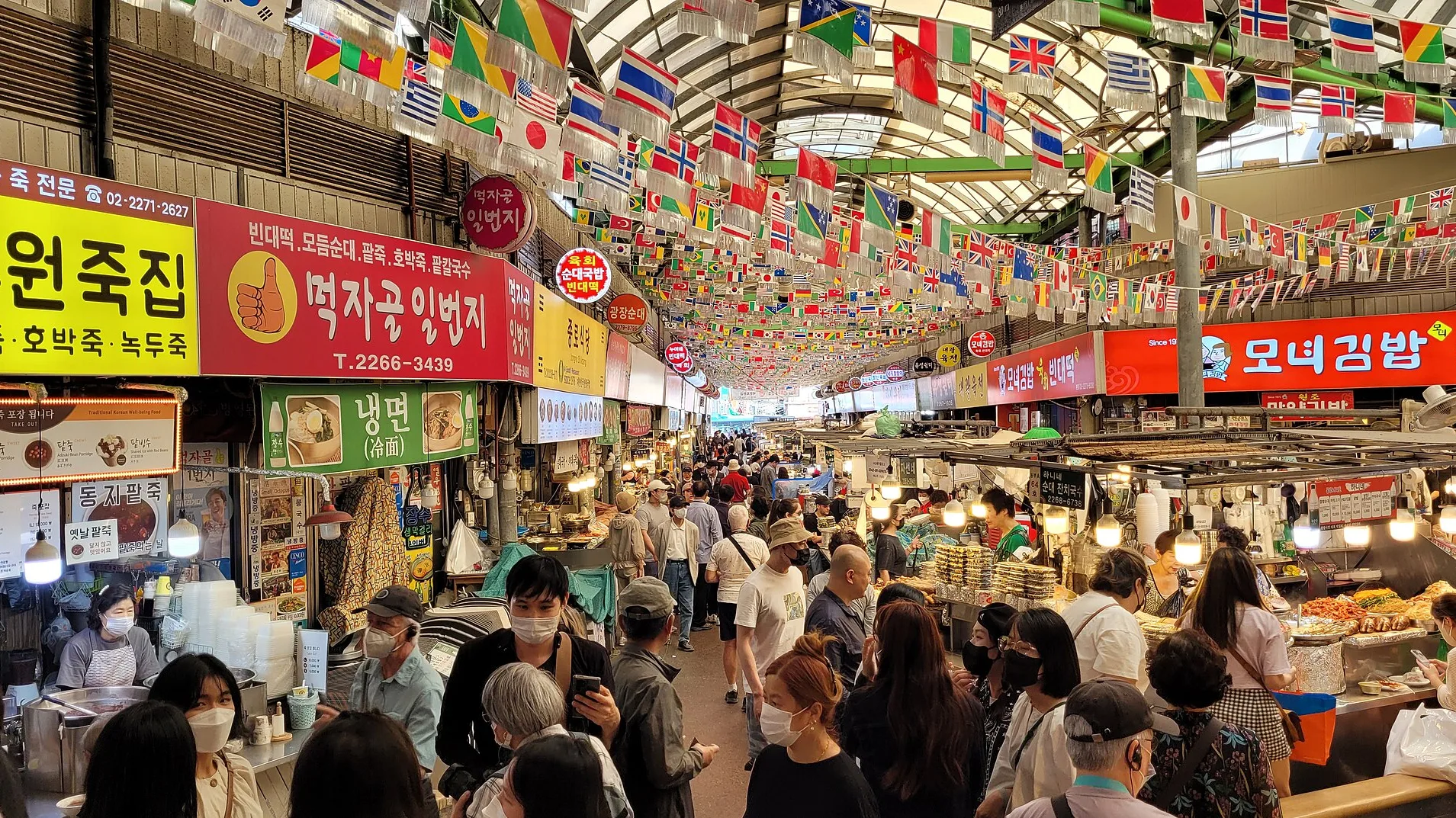
Start your Gwangjang Market street food visit with bindaetteok at about ₩5,000 and mayak gimbap at about ₩4,000 a plate. Add kalguksu for a filling bowl at about ₩6,000–₩8,000. Together, those orders come to about ₩15,000–₩17,000, excluding everything else. Yukhoe starts at about ₩12,000. These are approximate prices, not a fixed bill.
Calculation: 5,000 + 4,000 + 6,000 = 15,000
Calculation: 5,000 + 4,000 + 8,000 = 17,000
Build your Gwangjang Market street food meal around these orders
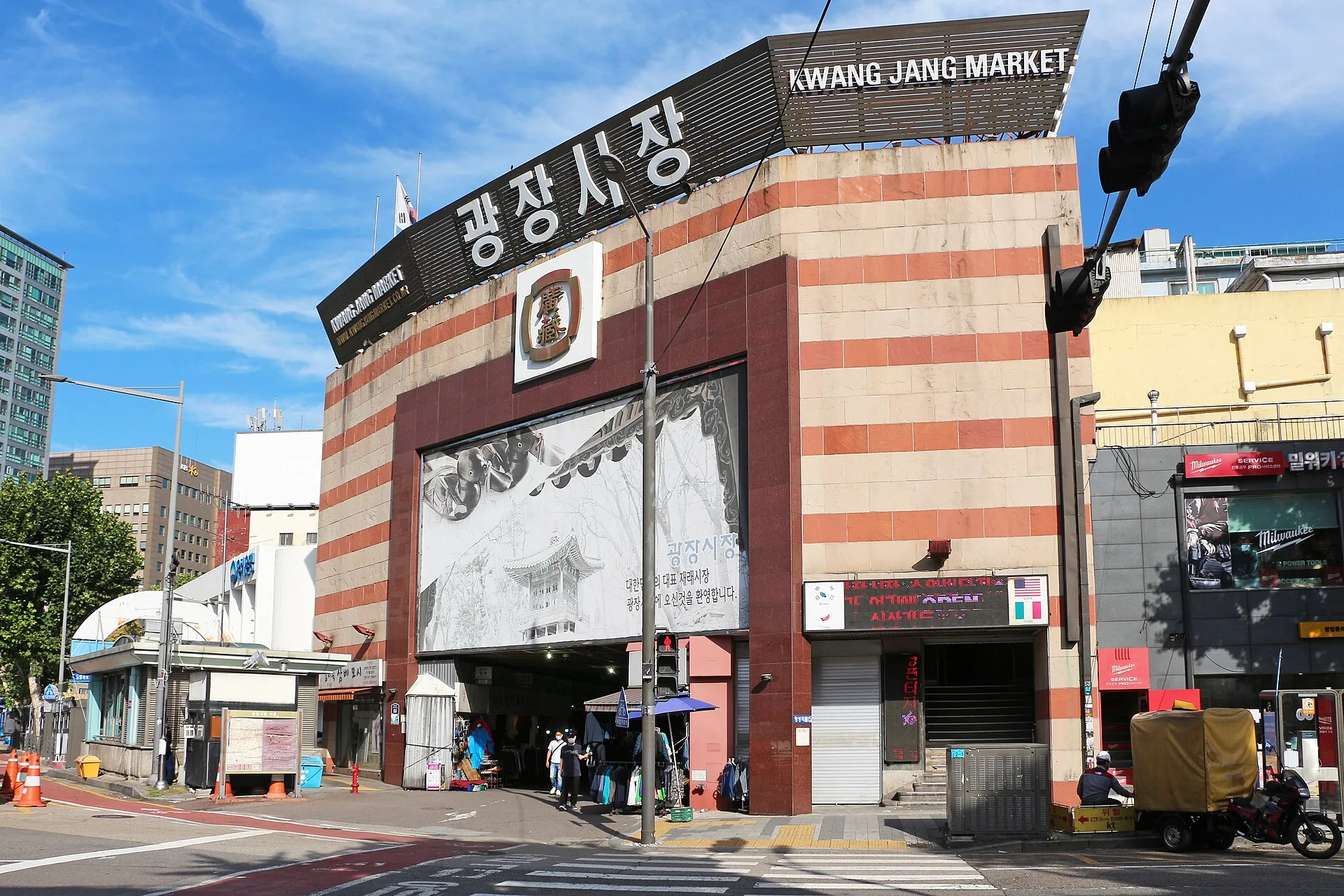
Bindaetteok was the food I wanted to start with. I paid ₩5,000 for a piece and found it deeply savory. The mung-bean batter can include pork, bracken fern, mung-bean sprouts, and cabbage kimchi. That matters if you pictured a plain vegetable pancake. For a first Korean street food stop, it gives you a clear starting point without a long menu decision.
| Food | Approximate price | Where it fits |
|---|---|---|
| Bindaetteok, a mung-bean pancake | ₩5,000 | Start here |
| Mayak gimbap | ₩4,000 per plate | A plate to share |
| Kalguksu, handmade noodles | ₩6,000–₩8,000 | A filling bowl |
| Yukhoe, Korean beef tartare | ₩12,000 or more | An optional alternative |
Source: unniespicking.com, tofuvtravels.com · checked Oct 4, 2026
Mayak gimbap makes sense as the next order, especially when you can share the plate. I ordered it alongside another gimbap dish, then moved on to dumplings. Next time, I would keep that first order simpler. The goal is to taste the market, not spend your appetite before reaching the noodles.
Kalguksu is the choice when you want this outing to become a meal rather than a string of snacks. The handmade noodles were my reason to stop. I also ordered a mix of kimchi and regular dumplings. The kimchi and dumplings ended up among my favorite bites of the trip. They are tempting extras, but they are not included in the three-item estimate.
Bring a short food list, not a plan to eat everything
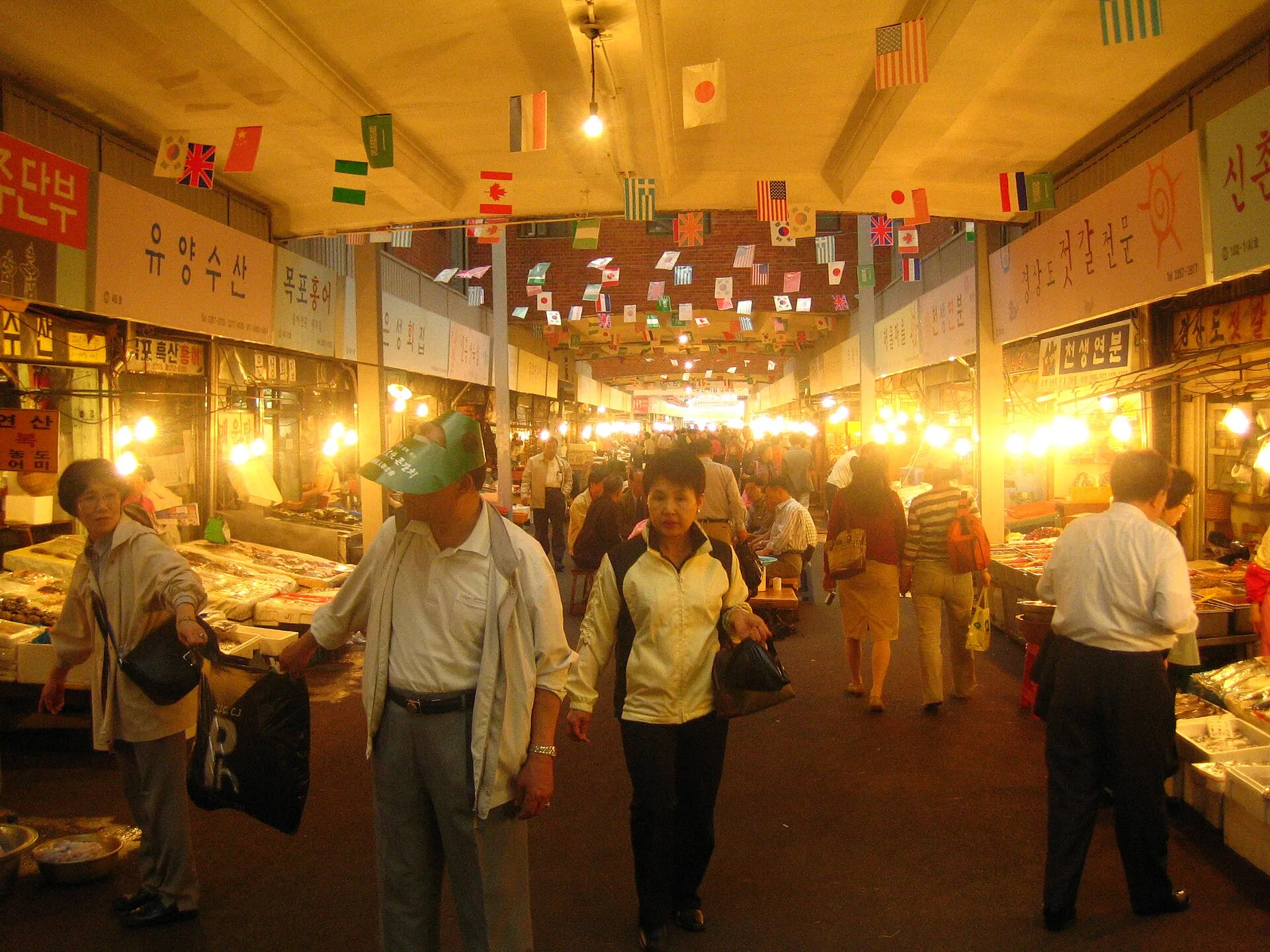 Photo: ayustety / Wikimedia Commons (CC BY-SA 2.0)
Keep the names bindaetteok, mayak gimbap, and kalguksu handy before you arrive. They give you a manageable starting list. Decide which one you most want to eat before adding snacks. I would put the pancake first and leave the noodle bowl as the decision point: am I still hungry enough for a meal?
Bring room in your appetite as well as your budget. I got full before eating everything I wanted and took food home instead. That is why I would order in stages rather than commit to a whole spread at the first stop. Sharing the gimbap plate can help keep the outing focused on tasting rather than finishing every order yourself.
Eat the pancake first, then decide how much more to order
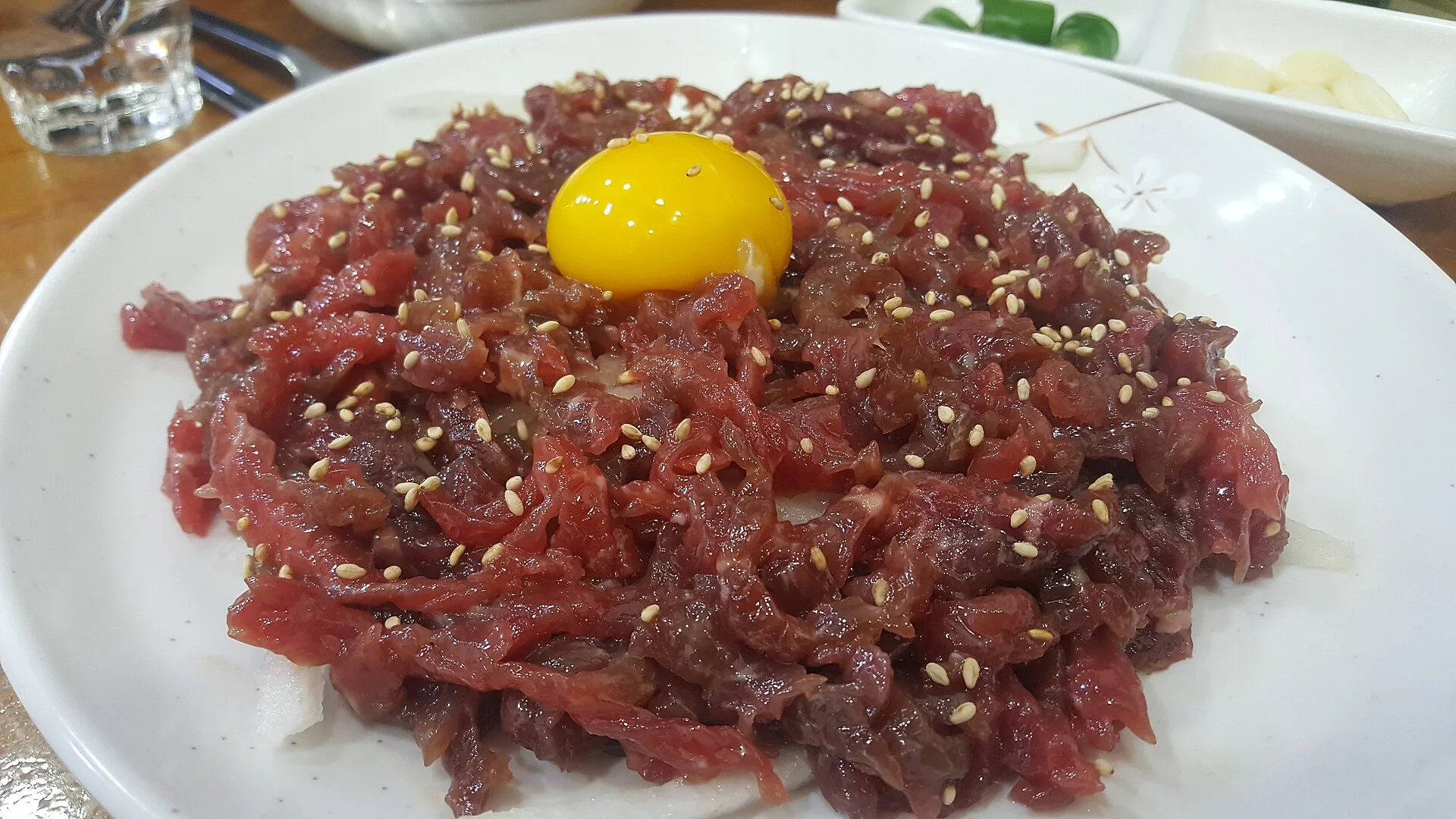 Photo: Choi2451 / Wikimedia Commons (CC BY-SA 3.0)
- Start with bindaetteok at about ₩5,000. Keep another pancake stall in mind if your first choice has a long line.
- Order mayak gimbap at about ₩4,000 a plate. Share it if that suits your group.
- Pause before ordering kalguksu. Budget about ₩6,000–₩8,000 if you still want a filling noodle bowl.
- Add dumplings or a sweet snack only after deciding whether you have room.
Use the following Gwangjang Market prices to decide what to add or swap, not as an invitation to order everything. A separate gimbap portion costs about ₩3,000, but that is not the same price entry as mayak gimbap. Keep the dish name and portion together when comparing costs.
| Additional food | Approximate price |
|---|---|
| Mandu, dumplings | ₩5,000 |
| Tteokbokki or twigim | ₩4,000–₩6,000 |
| Janchi guksu, another filling noodle option | ₩6,000–₩8,000 |
| Gimbap, a separate portion price | ₩3,000 |
| Sundae | ₩7,000 per portion |
| Twisted doughnut | ₩1,000–₩1,500 each |
| Sannakji | ₩12,000 or more |
Source: unniespicking.com, www.crispoflife.com, fatsochef.com · checked Oct 4, 2026
For something sweet, I liked the texture of the twisted doughnut and the black-sesame red-bean mochi ball. The doughnut is the option with a usable price range here. You can also find versions with red-bean, sweet-potato, or black-rice fillings. I would save that stop until after the savory food rather than buy it on impulse at the beginning.
Tteokbokki can be another stop rather than part of the noodle order. I ate mine standing up. The sauce worked well, although the raw shredded radish tasted sharp to me. Pajeon, cold noodles, fish cakes, seafood, and dumpling soup also widen the choices. Their individual prices are not established here, so they do not belong in the meal estimate.
Long lines can change the meal before your budget does
The pancake stalls were where the choice became confusing. There were several, and a long line did not make deciding easier. I skipped a screen-famous pancake shop because its queue looked too long. That was the useful adjustment: keep the food on the list, but do not make the entire visit depend on one stall.
I waited 10 minutes at a kalguksu stall. That is a detail from my meal, not a dependable wait-time forecast. The market can be very crowded, so leave flexibility between orders. If a queue would consume the time you meant to spend tasting other foods, choose which matters more before joining it.
Availability can also interrupt a wish list. I reached a rice-cake shop too late and found it closed. On another food stop, I tried twice to get the fish-shaped pastry bungeoppang without managing to taste it. I ate hotteok next door instead. A backup snack is more useful than treating every missed item as a failed visit.
The meal estimate covers food, not every practical detail
The ₩15,000–₩17,000 estimate covers one bindaetteok order, one mayak gimbap plate, and one kalguksu bowl. It excludes drinks, dumplings, dessert, and every other purchase. It is not a per-person quote for a shared meal. Prices and portions may vary, and the table is not a promise that every stall charges the same amount.
Calculation: 5,000 + 4,000 + 6,000 = 15,000
Calculation: 5,000 + 4,000 + 8,000 = 17,000
Foreign-card acceptance, English menus, and exact opening hours remain unconfirmed here. Ask about payment before ordering and the hours of any stall you are building your visit around. My closed-shop stop is a reason to avoid assuming that every vendor will be serving whenever you arrive.
My next visit would still start with the pancake and a shared gimbap plate. I would decide on kalguksu after those, rather than order extras automatically. Crowds, queues, and a full stomach can all shorten the menu you actually eat. A satisfying first visit does not require finishing the whole list.
Comments
No comments yet.