
Ganghwa Kalguksu: Yongwang’s Acorn Noodles Stay Springy and Keep the Broth Light After Long Cooking
At Dotori Bajirak Son Kalguksu, my Yongwang seafood kalguksu had springy acorn noodles and a light broth.
At Dotori Bajirak Son Kalguksu, my Yongwang seafood kalguksu had springy acorn noodles and a light broth. This Ganghwa kalguksu stayed that way even after extended cooking. Try it if you want seafood noodle soup that keeps its bite without turning thick as the meal goes on.
My Ganghwa kalguksu kept its springy noodles and light broth
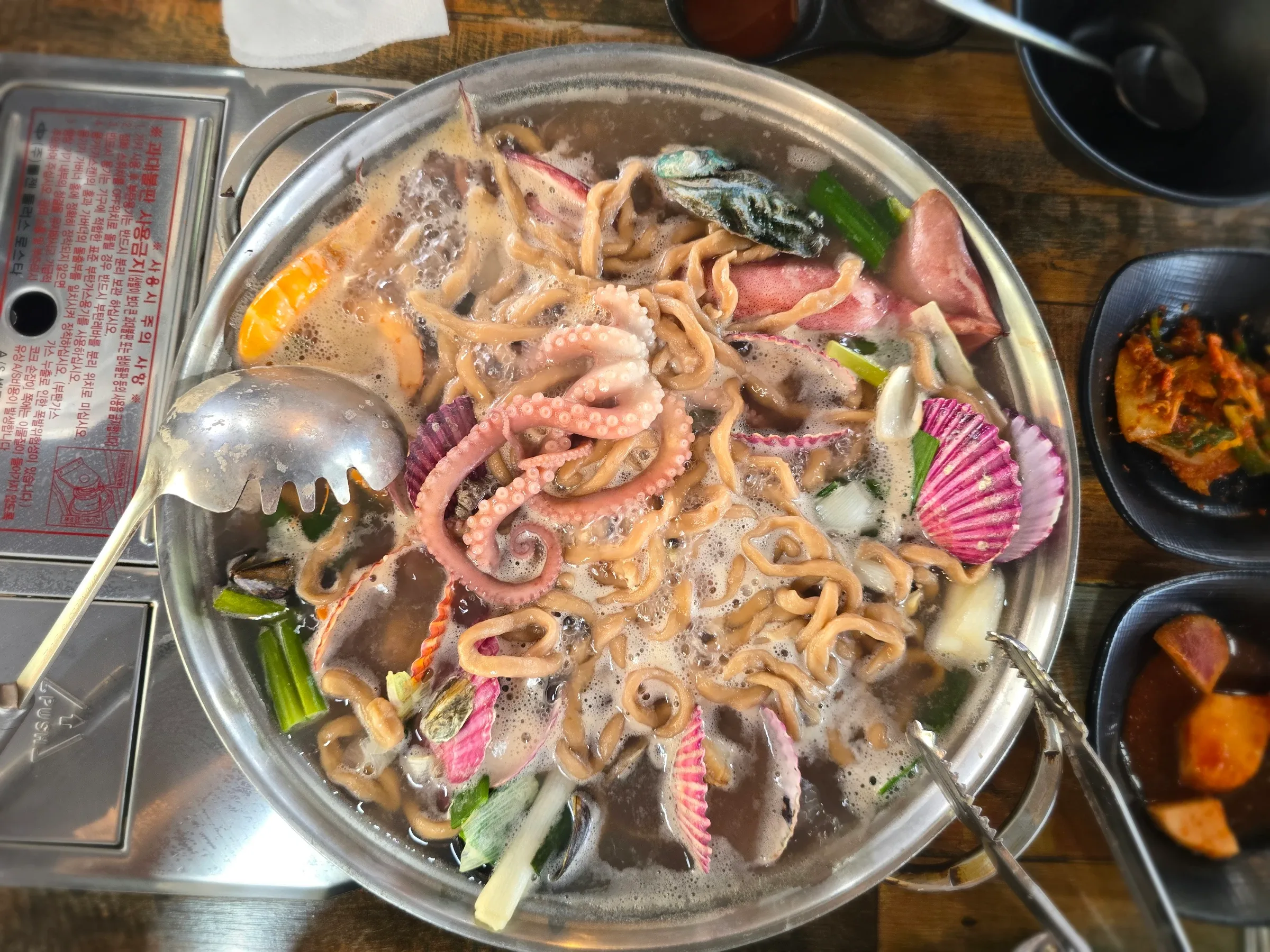
I ate the Yongwang seafood kalguksu with my wife. Kalguksu is Korean noodle soup; here, the acorn noodles were the part that stood out most. The pot had plenty of seafood, but the noodles held my attention through the meal.
What impressed me was how little the texture changed with continued cooking. The noodles stayed chewy and springy rather than becoming soft and swollen. Just as important, they did not turn the seafood broth into a thick, starchy soup.
That combination is my reason to recommend this acorn noodle kalguksu. I could enjoy the noodles without losing the light taste of the broth around them. My experience was with prolonged cooking during this meal, not a timed cooking test.
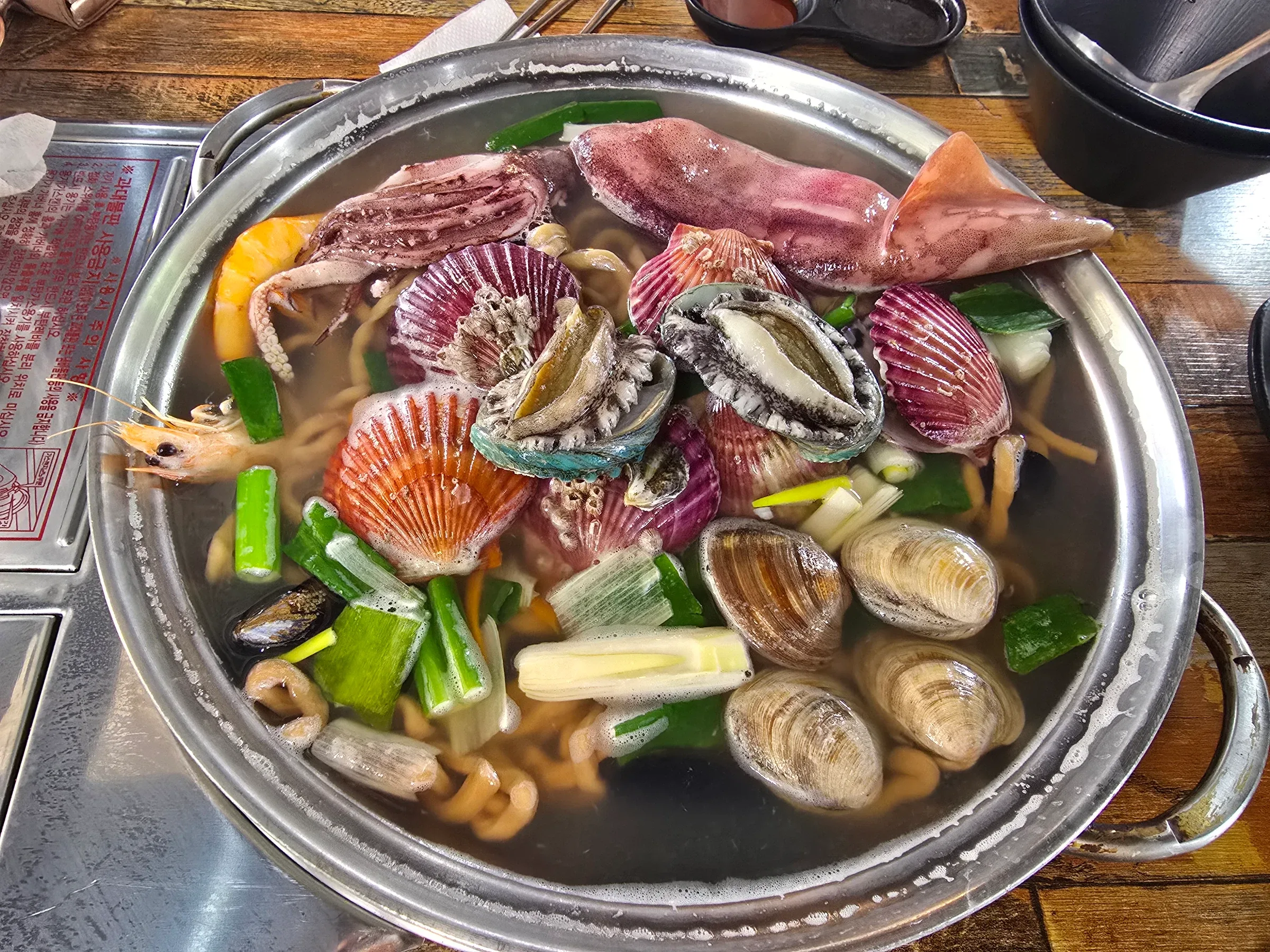
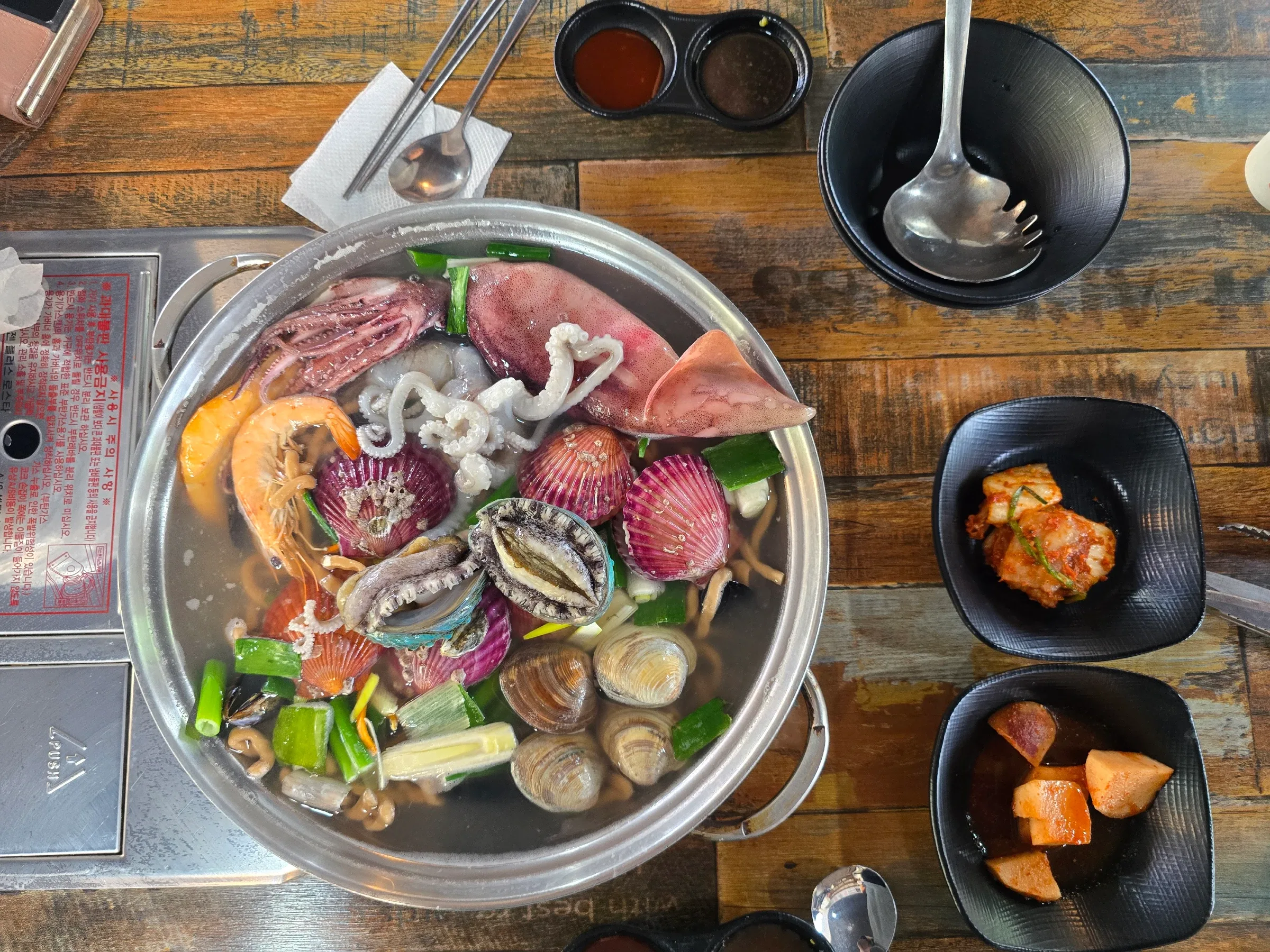
Octopus, squid, abalone, and scallops fill the Yongwang pot
The light broth and springy noodles came with octopus, squid, abalone, scallops, and other shellfish. There was plenty of seafood in the pot I ate. For a first Ganghwa Island seafood kalguksu meal, this gives you more variety than a clam-only choice.
Extended cooking did not soften the noodles or thicken the broth
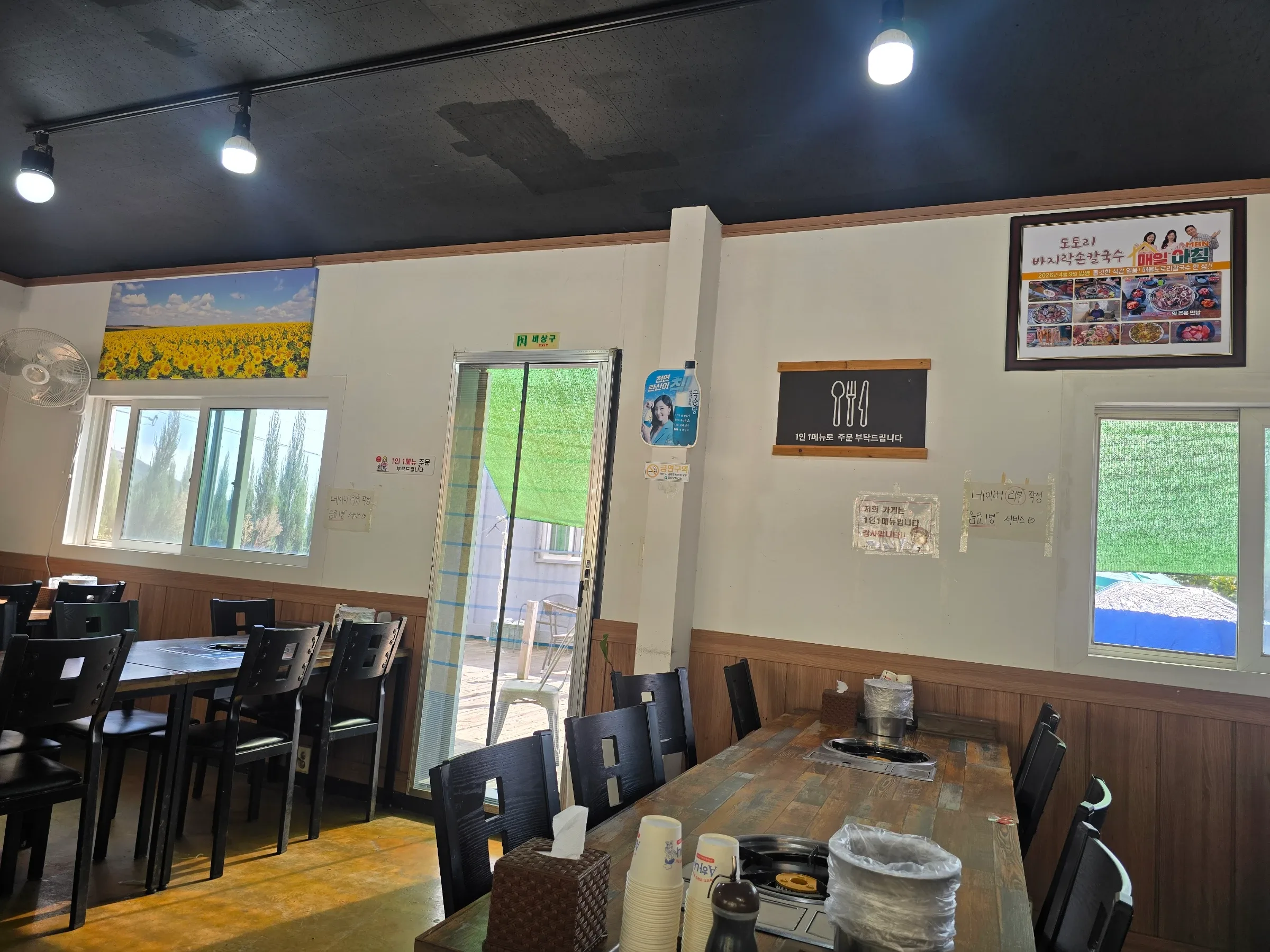
The springy noodles and light broth lasted beyond the first few bites. I noticed both qualities as the pot continued cooking. The noodles still had resistance when I ate them, while the soup kept its light seafood taste.
The useful distinction is texture, not a promise about nutrition. Acorn noodles were part of this dish, but my recommendation rests on how they ate. They stayed firm through my meal and did not make the broth thick.
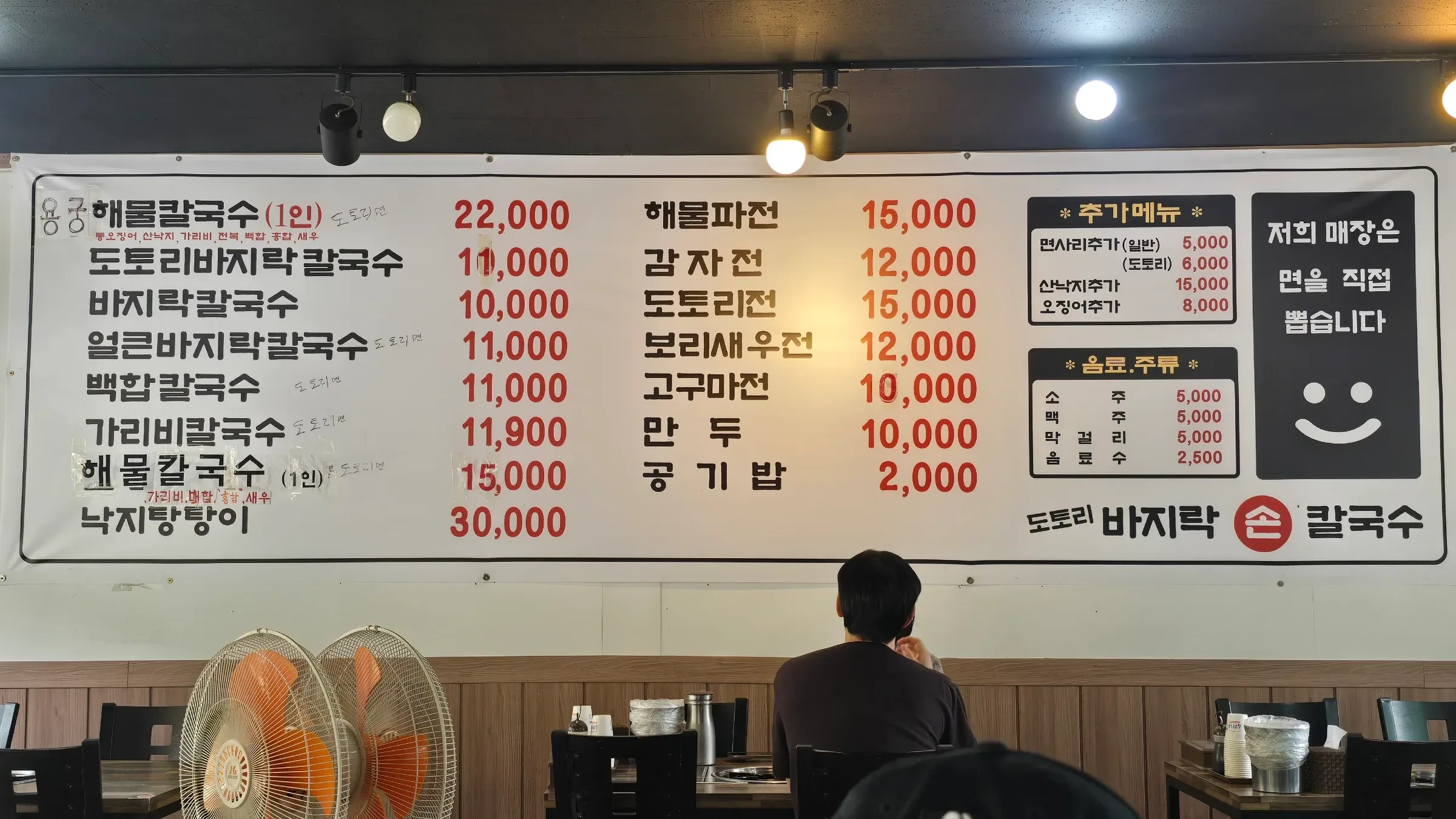
Yongwang is listed at ₩22,000 with a two-serving minimum
For the springy-noodle seafood pot I recommend, the menu lists Yongwang seafood kalguksu at ₩22,000. It also requires an order of at least two servings. That minimum matters when planning a meal alone.
Clam and other seafood kalguksu options cost less on the menu
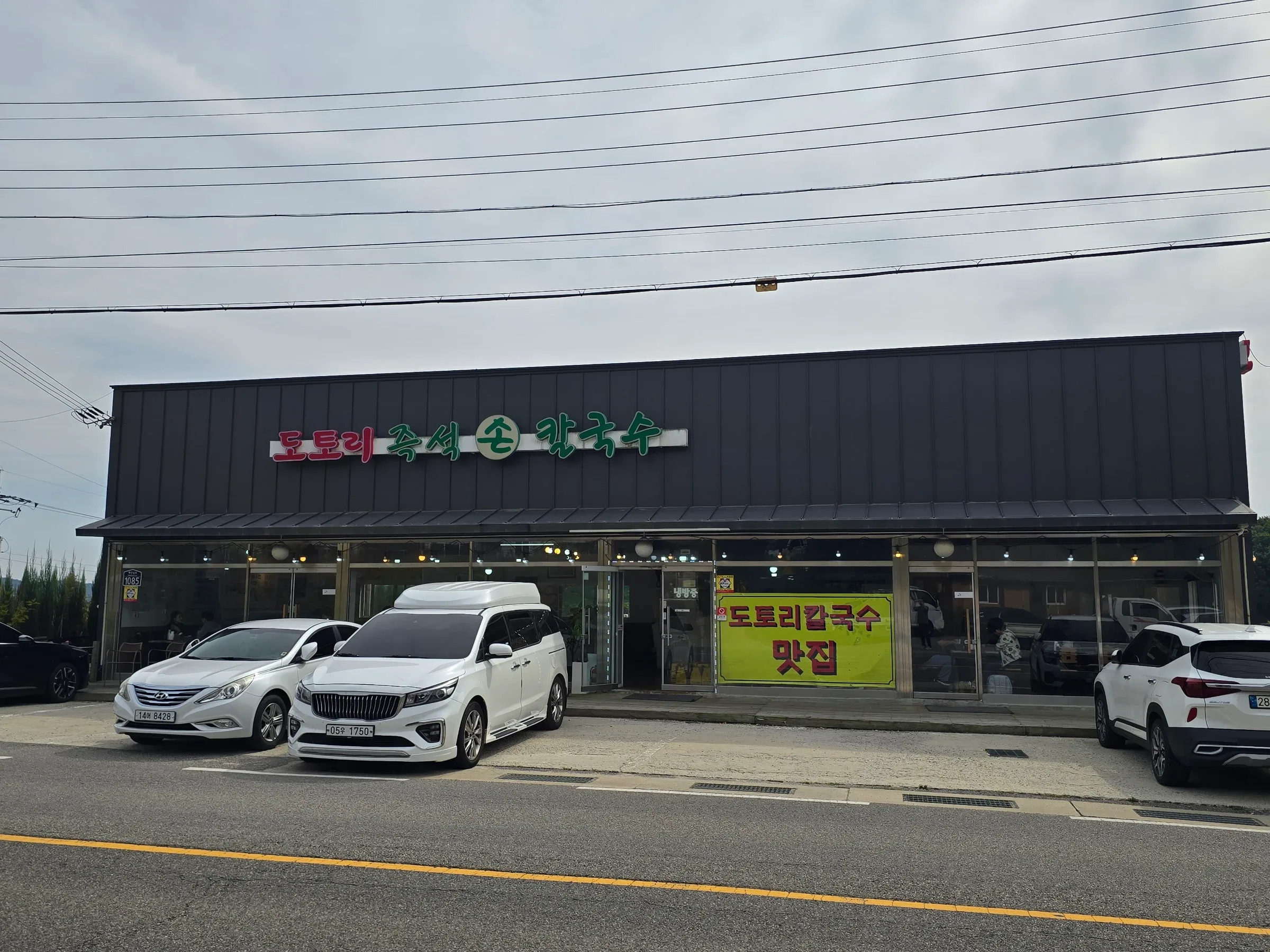
My springy-noodle experience was with Yongwang, but the menu also offers several less expensive noodle soups. The Ganghwa clam kalguksu choices include both regular clam soup and an acorn-noodle version.
| Menu item | Listed price |
|---|---|
| Clam kalguksu | ₩10,000 |
| Acorn clam hand-cut kalguksu | ₩11,000 |
| Seafood kalguksu | ₩15,000 |
| Spicy clam kalguksu | ₩11,000 |
| Hard clam kalguksu | ₩11,000 |
| Scallop kalguksu | ₩11,900 |
Source: Naver Place · checked Oct 5, 2026
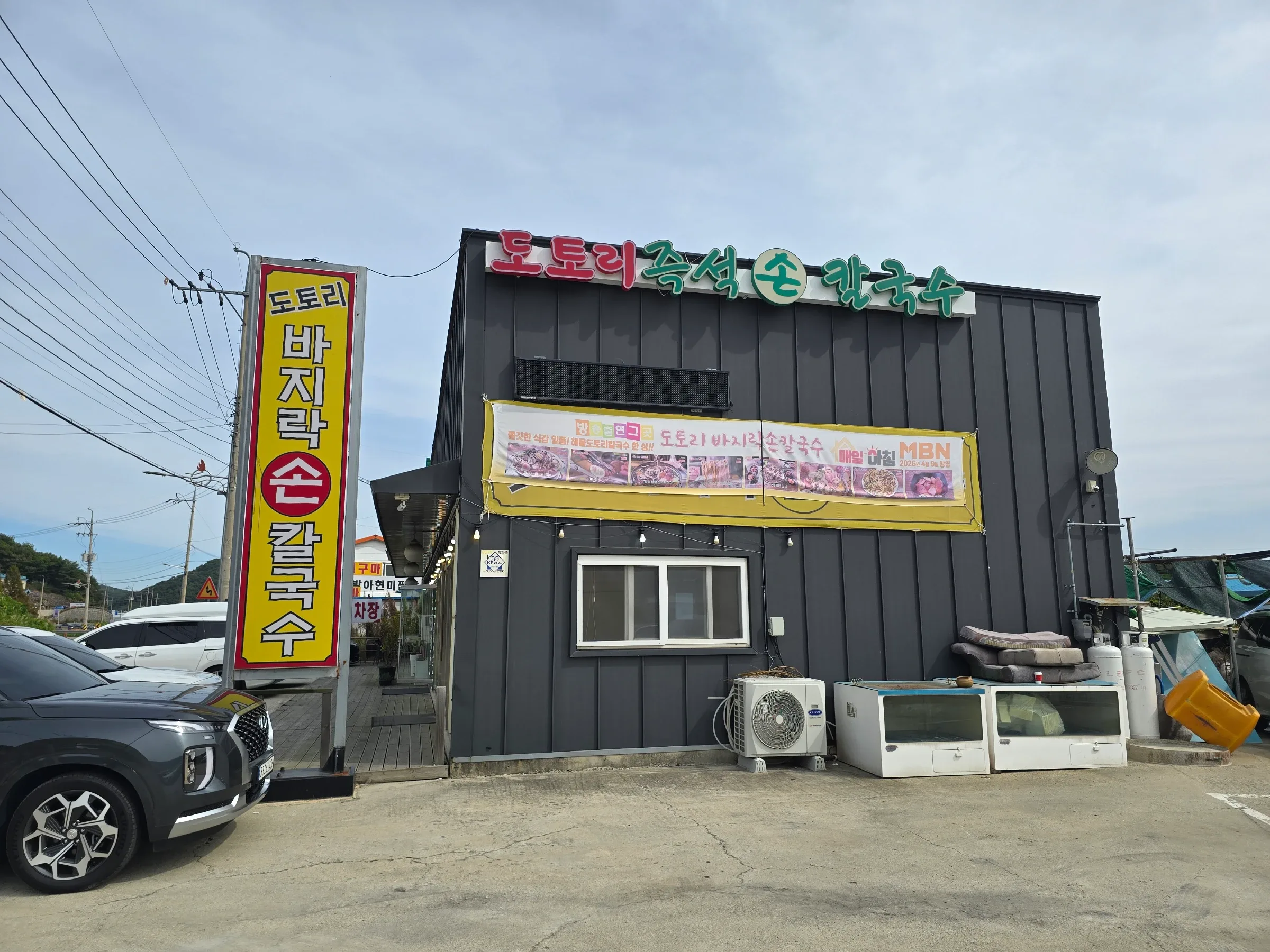
Getting there: Haeannam-ro, on the way to Dongmak Beach
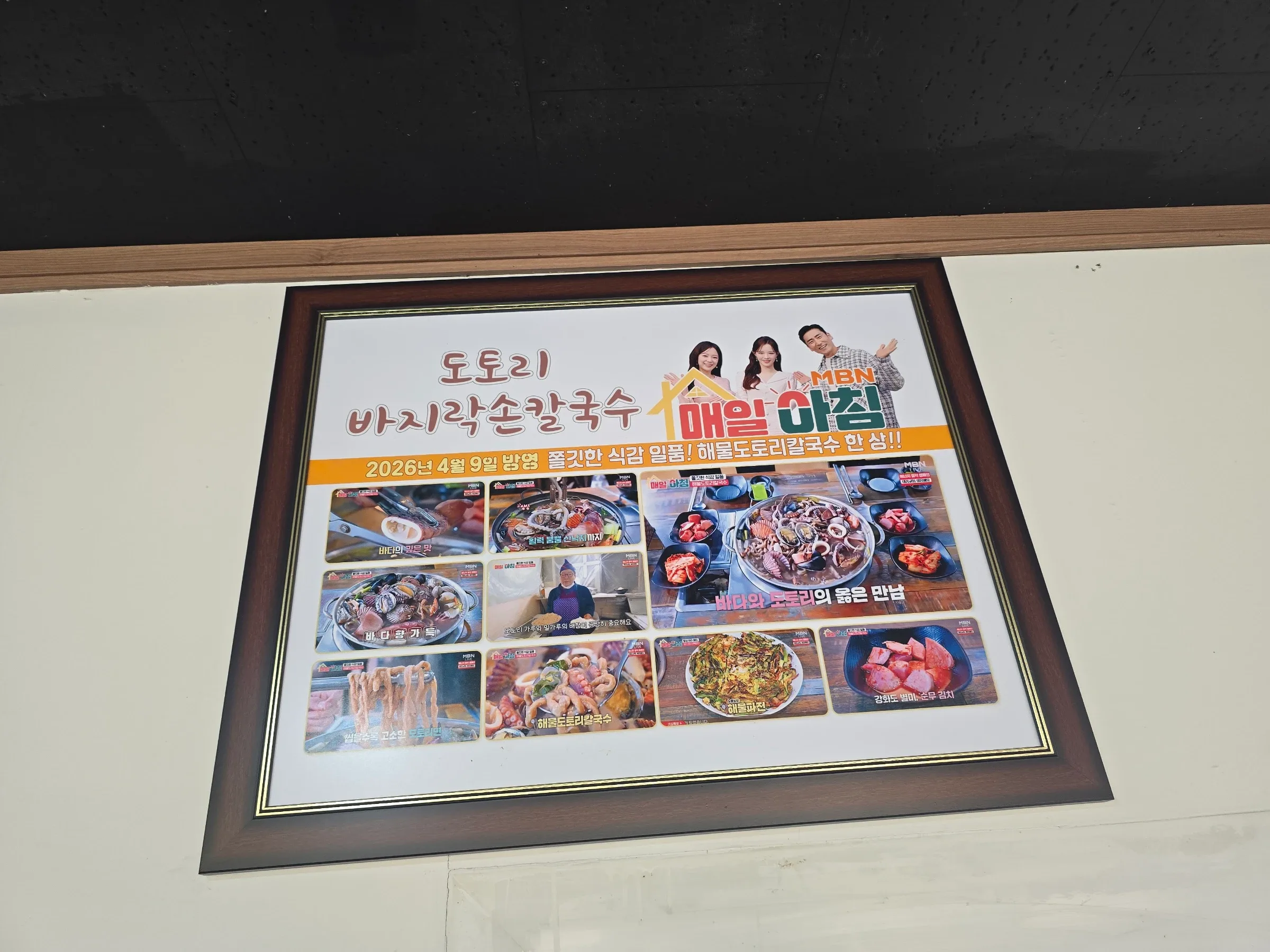
For this springy-noodle seafood meal, head to 1085 Haeannam-ro, Hwado-myeon, Ganghwa-gun, Incheon. The restaurant is on the first floor. It is on the route toward Dongmak Beach after crossing Choji Bridge.
Parking is available. Public transportation directions are unavailable for this restaurant.
How to order: choose Yongwang and plan for at least two servings
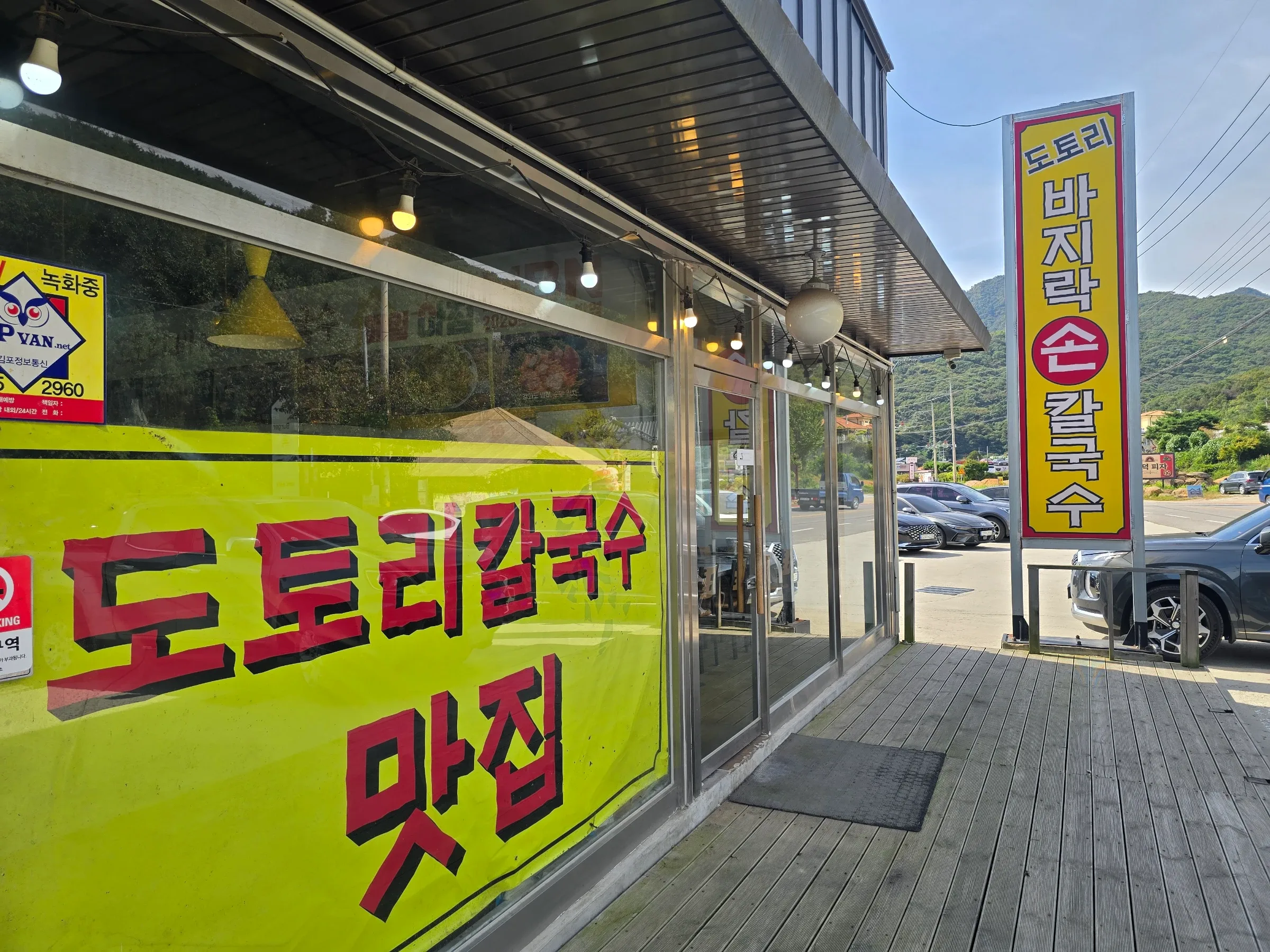
To choose the dish with the springy acorn noodles I ate, use the menu name 용왕 해물 칼국수. The menu requires at least two servings. Information about queuing, counter ordering, table service, or app ordering is unavailable.
My recommendation covers Yongwang, not a menu-wide taste test
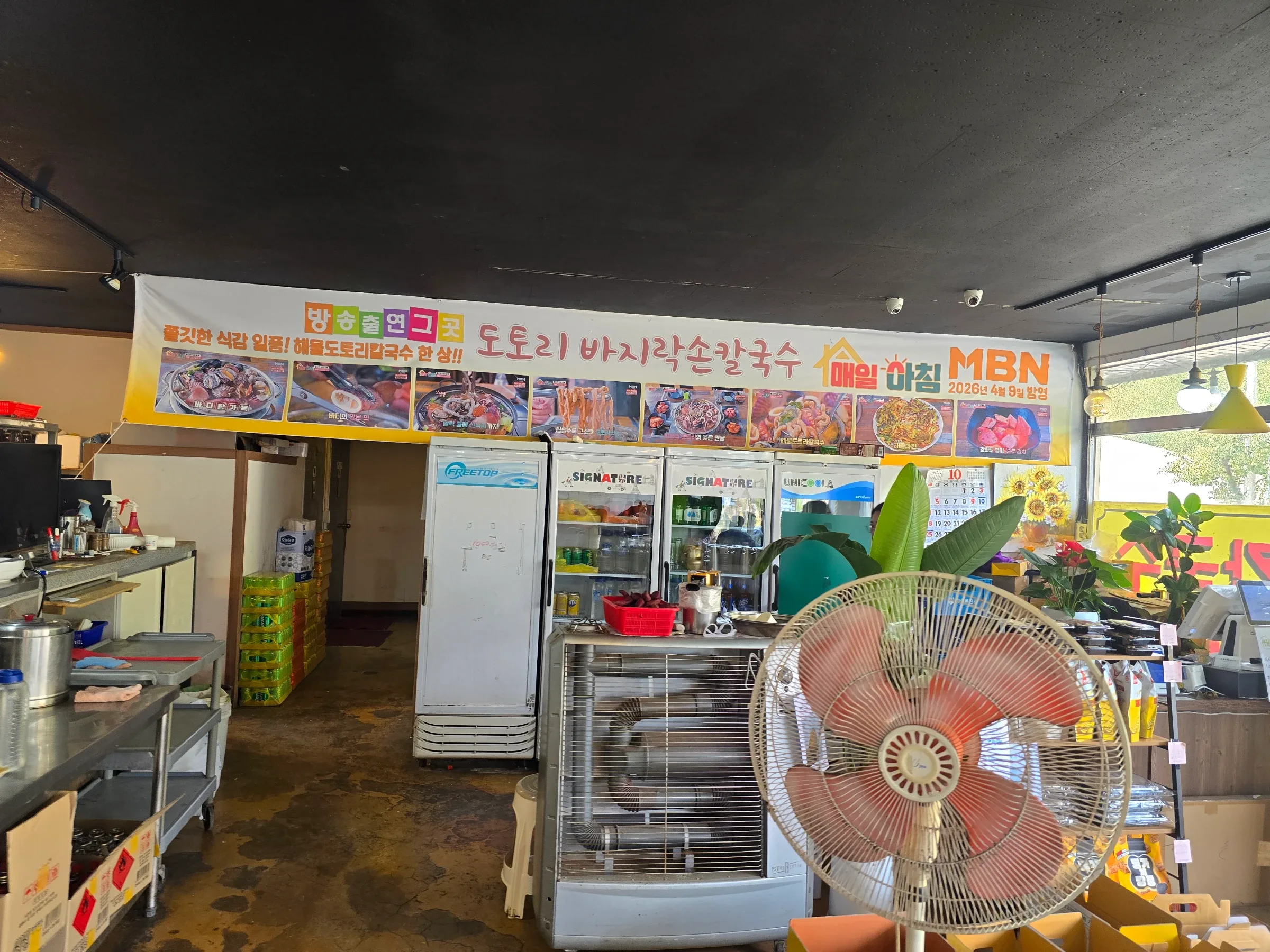
My meal was Yongwang seafood kalguksu with my wife, not a side-by-side tasting of the other noodle soups. The prices above help you compare menu choices; they are not taste rankings.
I would choose Yongwang for seafood broth with springy acorn noodles. In my meal, they stayed firm and kept the broth light even after extended cooking. The destination is 1085 Haeannam-ro, Hwado-myeon, Ganghwa-gun, Incheon.
Comments
No comments yet.