
Study in South Korea Cost: How Much Should You Budget?
 AI-generated image
Budget $4,000–$20,000 a year in tuition, plus a monthly living allowance
 AI-generated image
Budget about $4,000–$20,000 a year in undergraduate tuition (around $11,000 on average). Add €600–1.200 a month in living costs, depending mostly on the city and your housing. That's the core number for studying in South Korea as an international student. Scholarships can shrink it, but many cover only part of the bill, so plan to have some of your own money ready. This guide walks through the cost first, then the steps, the visa and the paperwork that come with it.
Why the range is so wide
 AI-generated image
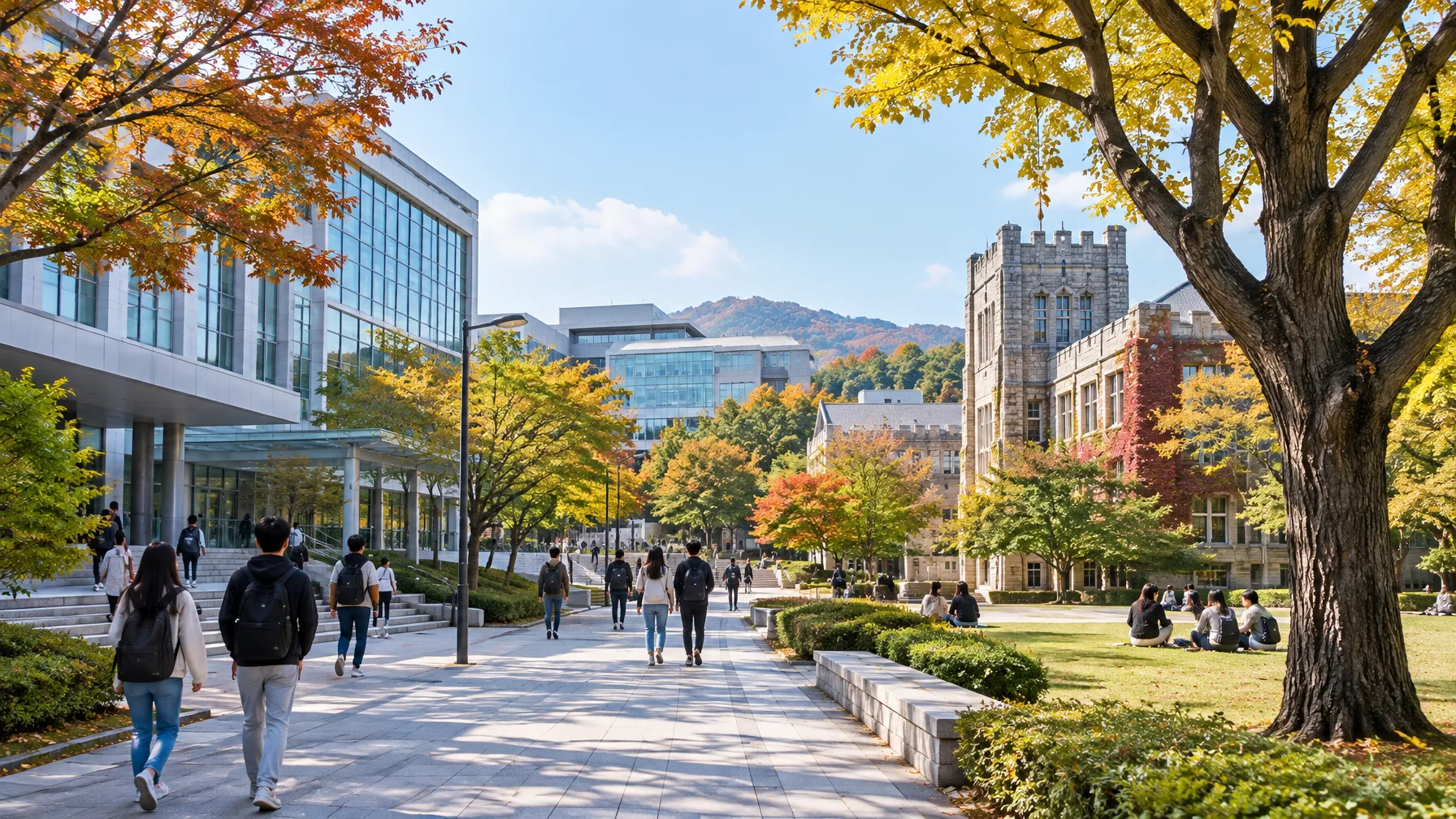
The tuition spread is big because the price depends on the school and the program you pick. Entry requirements, language ability, curriculum and scholarships all vary by university and major. So the number you pay is the one on your own school's list, not a national average. The monthly living range moves mostly with the city and with where you sleep.
The five steps from first search to boarding the plane
 AI-generated image
Studying in Korea runs through five stages. Here they are in order.
- Collect information about studying in Korea.
- Choose your school and major.
- Apply for admission, online or by post depending on the university.
- Receive your standard certificate of admission.
- Get your visa and prepare to leave.
Pick the school and major before anything else. Entry requirements, including language ability, and the scholarship options differ for each one.
GKS can cover tuition, a stipend and airfare, but not every cost
The Global Korea Scholarship (GKS) is run by NIIED. It covers language education, tuition fees, a monthly stipend and airfare. Beyond GKS, scholarships come from universities, companies and foundations. You can browse them on the official site. The catch is that many scholarships pay only part of the tuition. Language-study and exchange semesters are especially hard to fund this way. Scholarships mostly go to degree students.
Proof of funds and housing add to the tuition bill
The visa needs proof of your money. The application typically asks for a valid passport, an acceptance letter and a photograph. It also wants a bank account statement showing financial means and a health insurance certificate. So your financial means have to be visible on paper before you fly.
Housing is the other big piece. Some programs offer dorms for international students, assigned by the university itself, and they can fill up fast. Apply early. If you miss out, or want your own space, the fallback is a goshiwon (a tiny rented room) or a private apartment. Costs and conditions for those are worth pricing before you commit.
A smaller city or a dorm can beat renting in Seoul
Seoul is intense, and daily life there costs noticeably more than in a regional city such as Busan. For a first-timer on a tight budget, a regional city is often the easier fit. A dorm, if you can get one, keeps housing simpler than hunting for a room yourself. Renting near the Yonsei Songdo campus, not Sinchon, can mean commuting from Incheon to Sinchon for almost two years. Check which campus your program meets on before signing any lease.
The D-2 visa takes about 2 to 4 weeks, and the ARC follows within 90 days
Full-time undergraduate, master's and doctoral students apply in the D-2 category. Processing usually takes 2 to 4 weeks, with an average of around 30 days. Once you arrive, every student must apply for the alien registration card (ARC) within 90 days. Very short programs such as summer school may not need a visa at all.
Part-time work starts after six months, capped at 20 hours
Student visa holders may work up to 20 hours a week, but only after six months in the country. That helps with daily expenses, though it won't cover tuition. Plan your savings so the first half year is funded without a paycheck.
One page: your budget and timeline
| Item | Amount or timing |
|---|---|
| Undergraduate tuition, per year | $4,000–$20,000 (about $11,000 average) |
| Living costs, per month | €600–1.200 |
| GKS covers | Language education, tuition, monthly stipend, airfare |
| D-2 visa processing | About 2 to 4 weeks |
| ARC application | Within 90 days of arrival |
| Part-time work | Up to 20 hours a week after 6 months |
Common misunderstandings about the cost of studying in Korea
Don't treat a scholarship as a full ride. Many only cover part of the cost, and language-study or exchange terms rarely qualify. Prices in Korea are also high for housing, food and transport. So a student budget can feel tight if you pay tuition and living costs yourself.
Language is a cost too, in a different way. Degree programs usually ask for TOPIK level 3 or higher, and even English-taught degrees often mix in Korean classes. Life off campus is harder without Korean, especially when talking with older people.
More reading before you commit
Many international students are highly satisfied with both studies and daily life. The cost is easier to carry when you plan it well. Plan for roughly $4,000–$20,000 a year in undergraduate tuition (about $11,000 on average) plus €600–1.200 a month to live. GKS can cover tuition, a monthly stipend and airfare. But many scholarships cover only part of the bill, so keep your own funds ready.
Comments
No comments yet.