
Dotori Bajirak Sonkalguksu in Ganghwa-do: Yongwang Haemul Kalguksu with Chewy Acorn Noodles
My wife and I ate seafood-loaded Yongwang Haemul Kalguksu at Dotori Bajirak Sonkalguksu in Ganghwa-do.
My wife and I ate seafood-loaded Yongwang Haemul Kalguksu at Dotori Bajirak Sonkalguksu in Ganghwa-do. The acorn noodles stayed chewy, and the broth kept its light taste through a long boil. For me, that lasting texture made this Ganghwa-do kalguksu worth remembering.
Our seafood-filled kalguksu kept its chewy noodles and light broth
I shared the Yongwang Haemul Kalguksu with my wife and ate it as the pot continued boiling. My experience here centers on that dish, especially how the noodles and broth held up as we ate.
Getting to the roadside restaurant, with parking out front
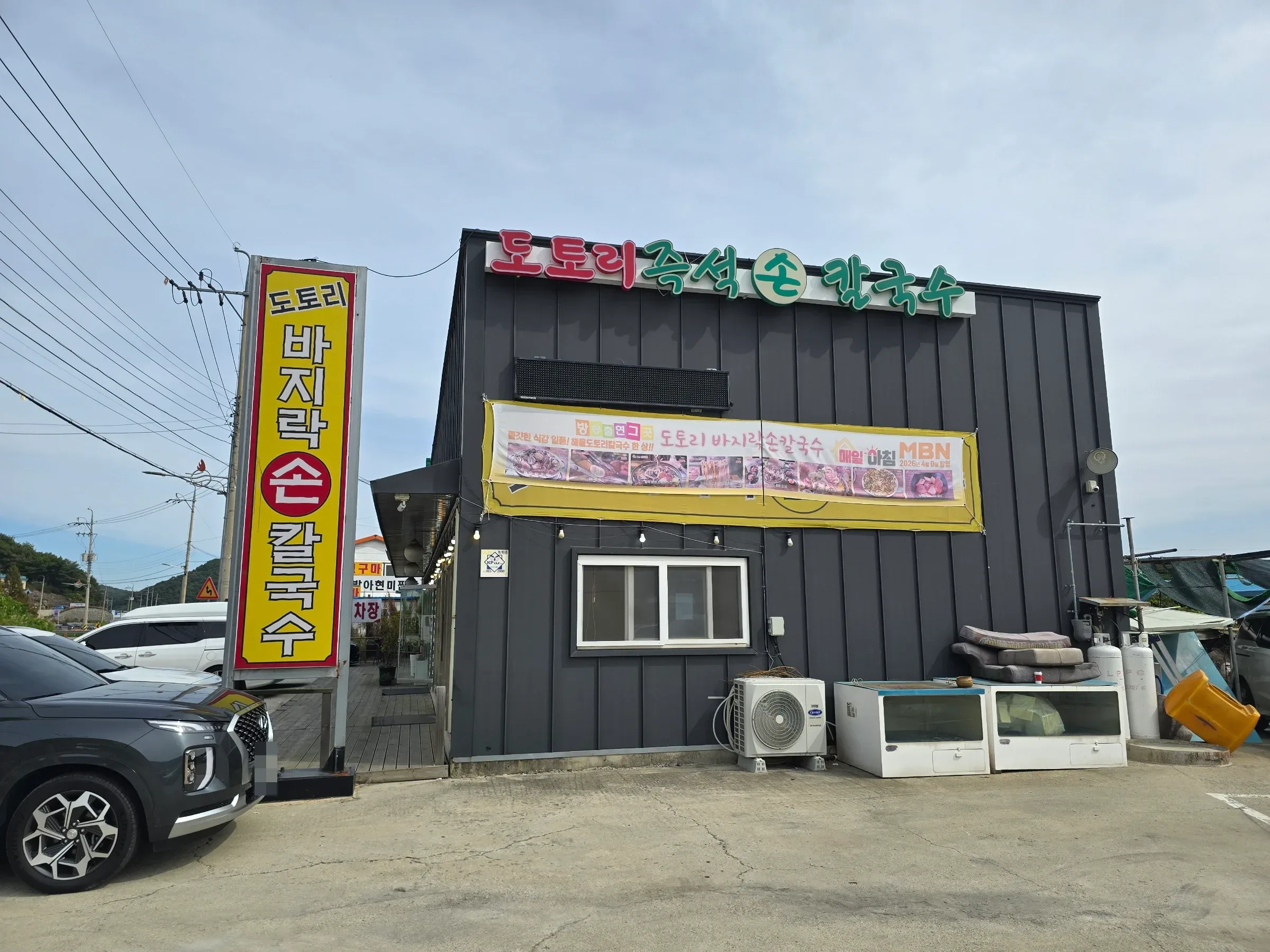
Our seafood meal was at 1085 Haeannam-ro, Hwado-myeon, Ganghwa-gun, Incheon, on the first floor. This Ganghwa-do restaurant sits along the route toward Dongmak Beach after crossing Chojidaegyo.
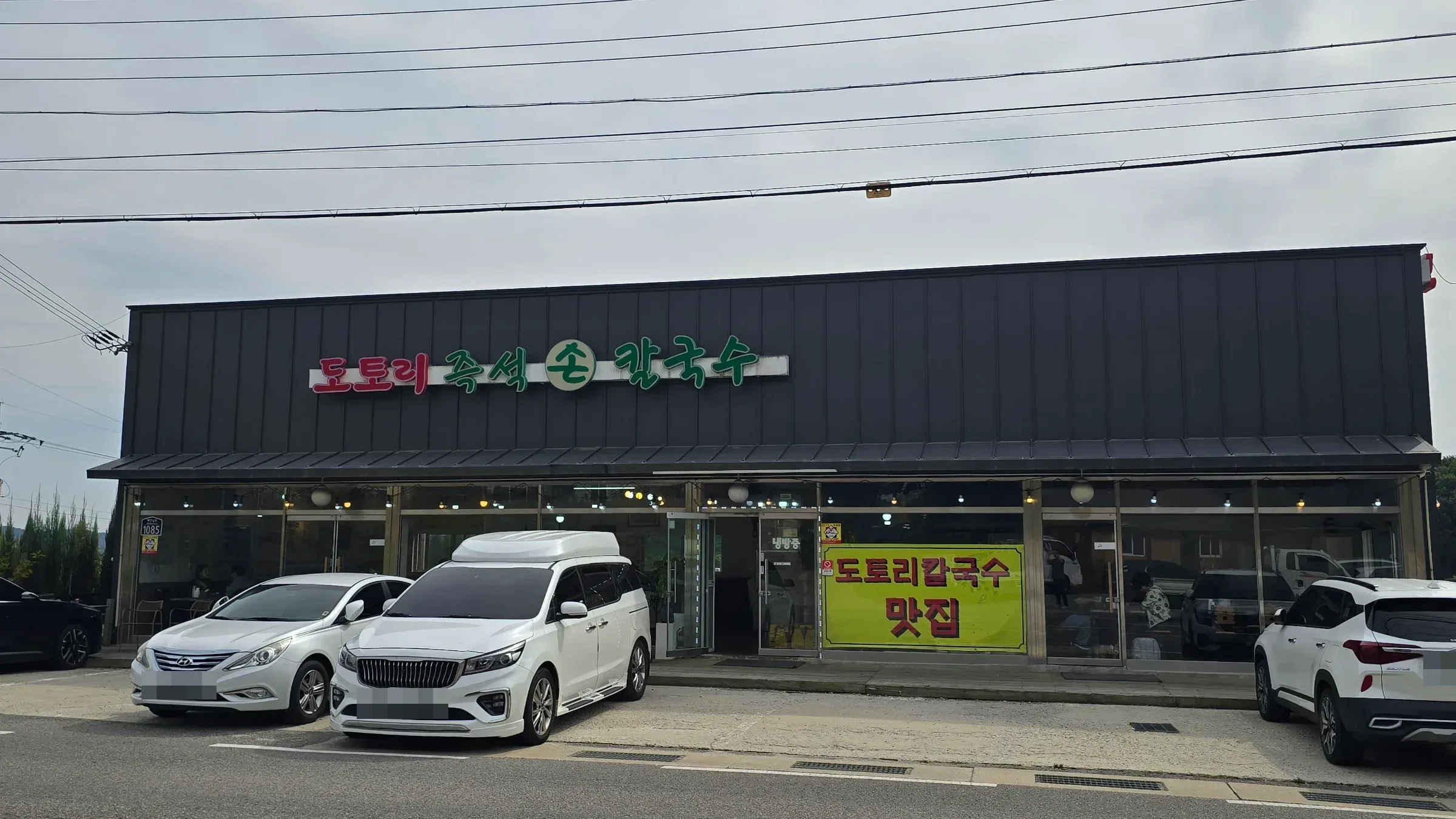
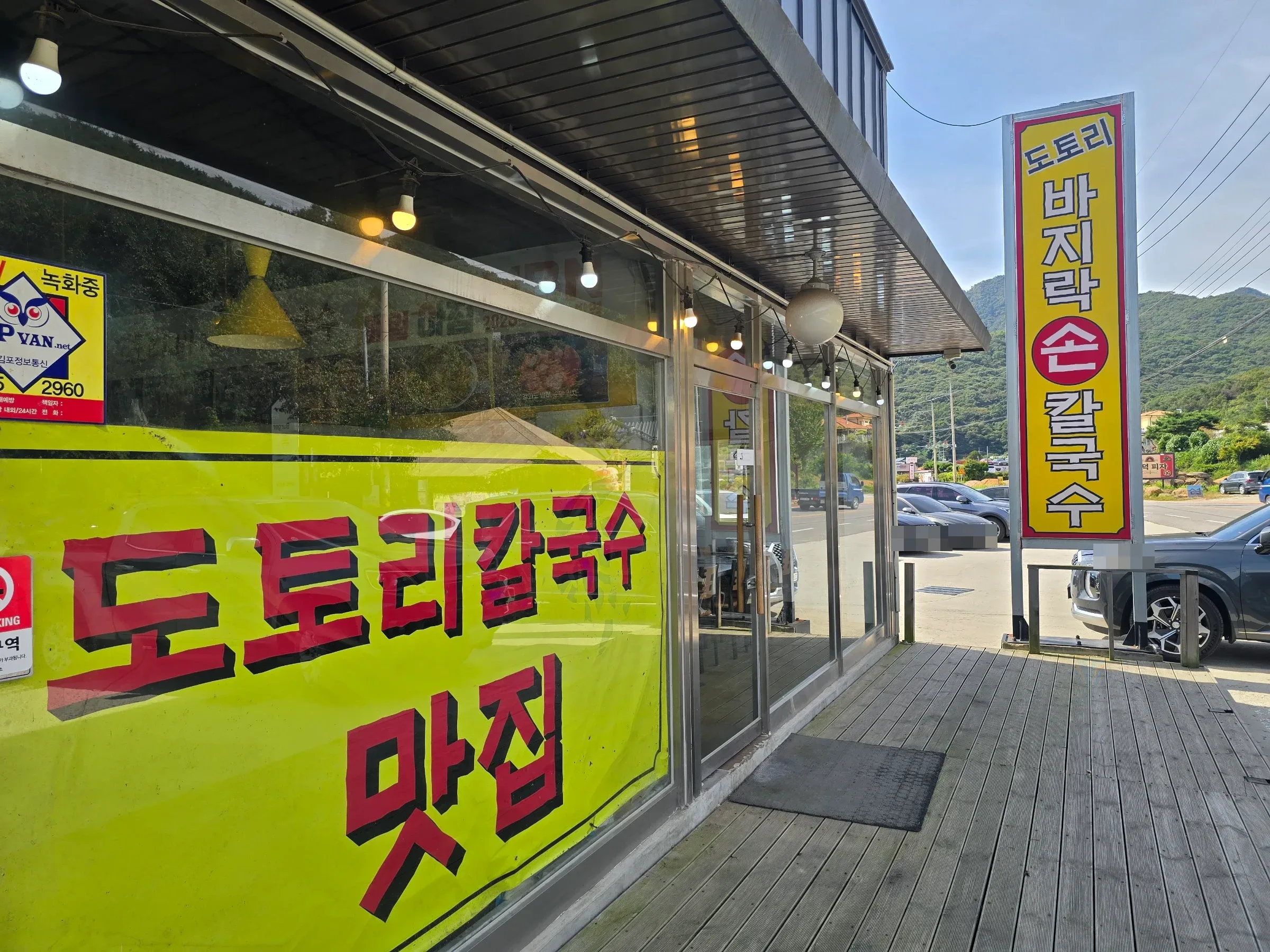
From across the road, I saw the dark exterior, a large green-lettered sign, and cars by the entrance. Parking is available, with space for about 10–12 vehicles. I followed the outdoor wooden deck toward the entrance.
Inside: wood-pattern tables, black chairs, and greenery through the windows
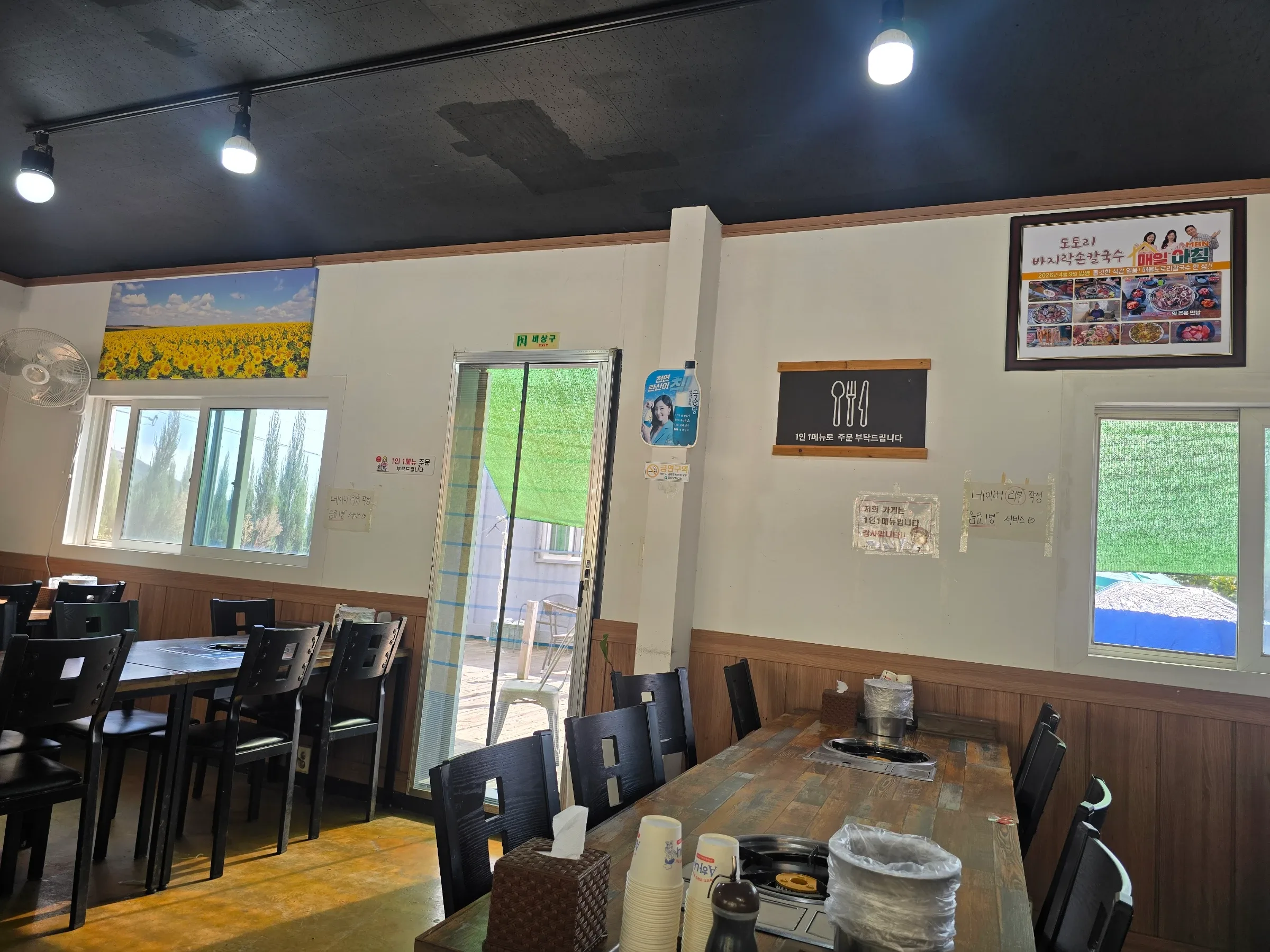
Before our seafood pot arrived, I took in the wood-pattern tables and black chairs inside. Green scenery showed through the windows. A wall notice asked each person to order a menu item.
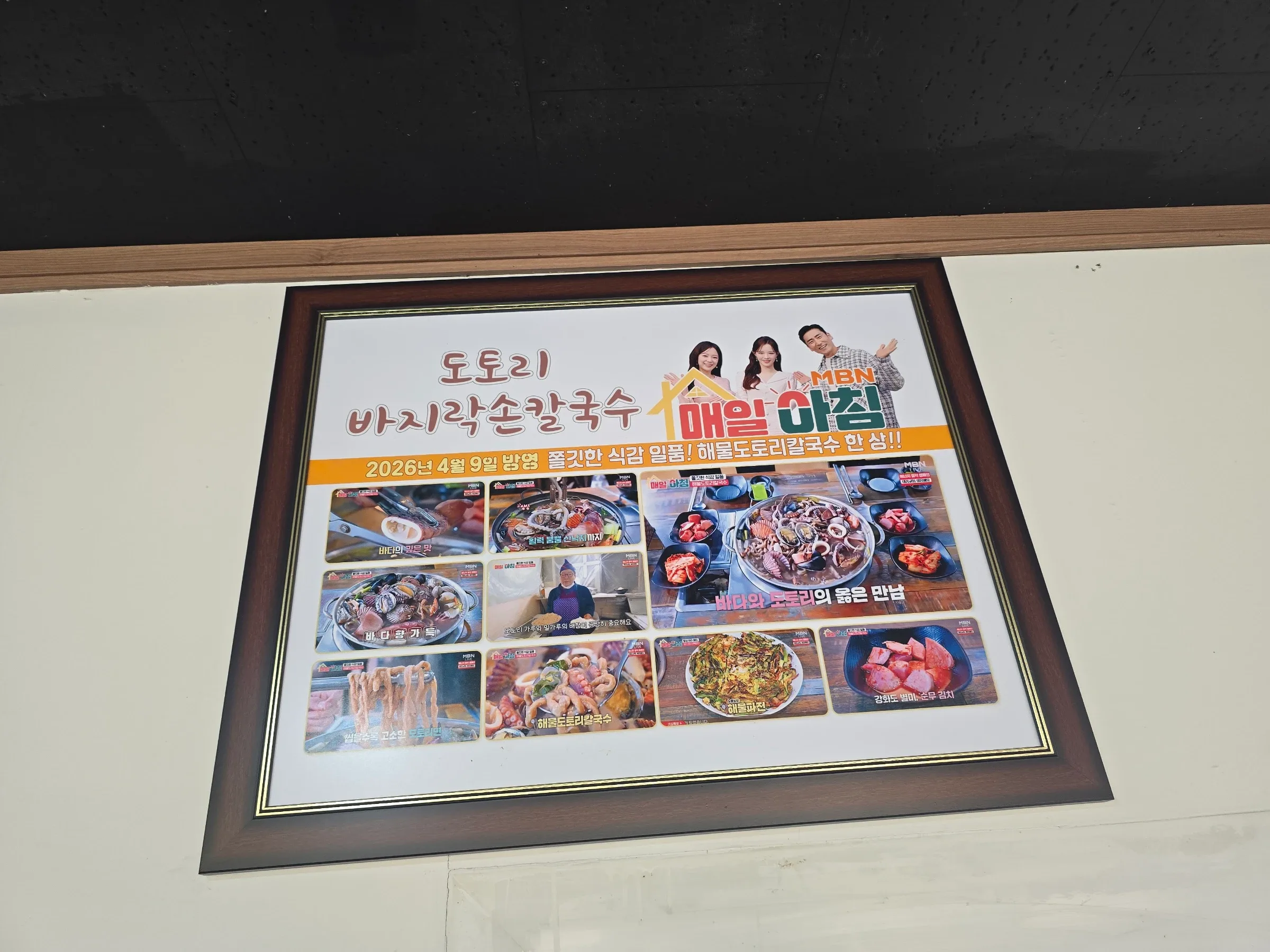
Farther inside, I could see refrigerators, a fan, and the kitchen work area. Food photos hung above the refrigerators. It felt like a working dining room, with the kitchen activity close by.
Ordering Yongwang Haemul Kalguksu means a minimum of two
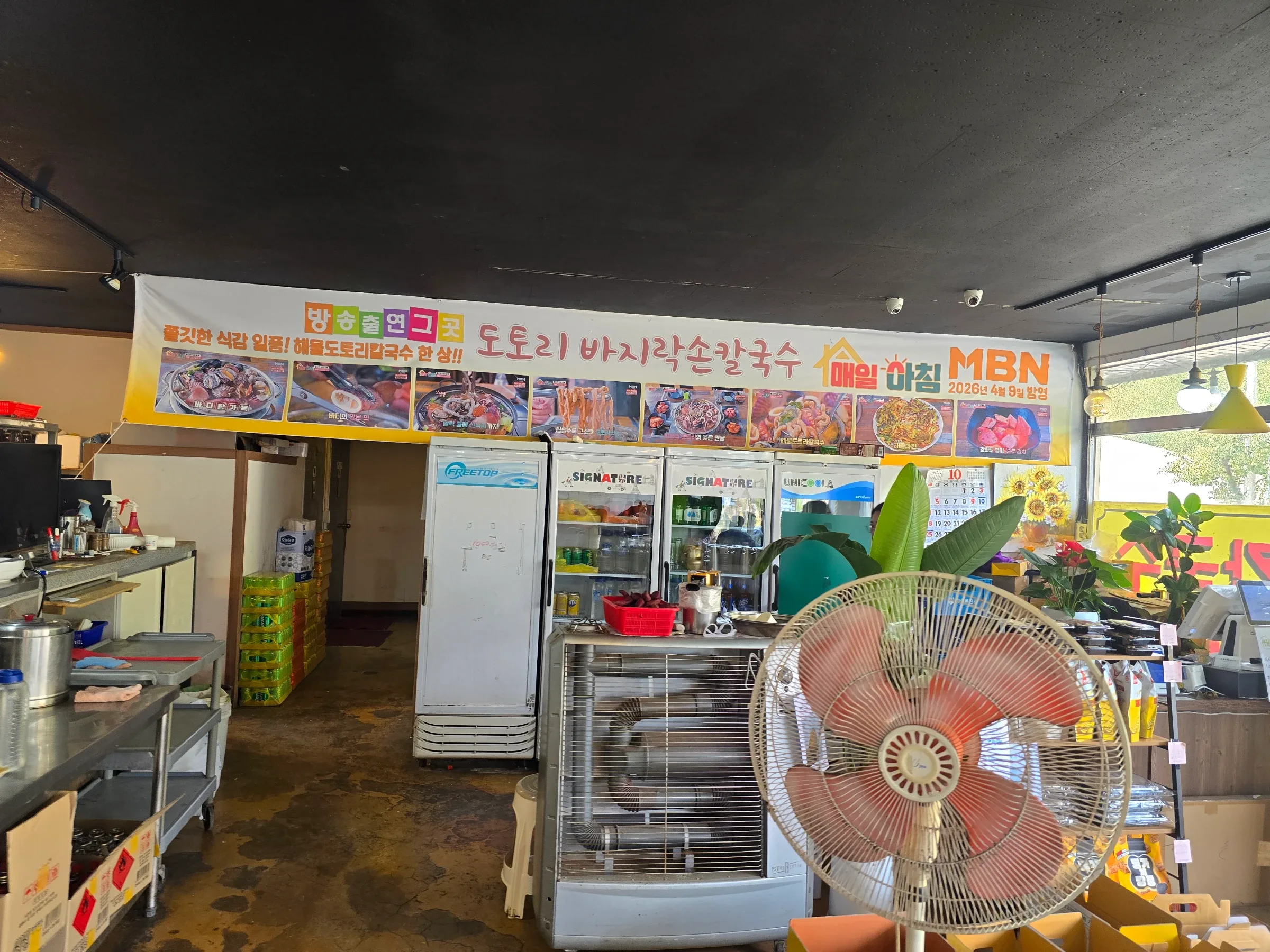
The seafood-loaded dish we ate is Yongwang Haemul Kalguksu, listed at ₩22,000 with a minimum order of two. That minimum matters when choosing this particular dish. The dining room also asks for one menu item per person.
The listed ₩22,000 price belongs to Yongwang Haemul Kalguksu
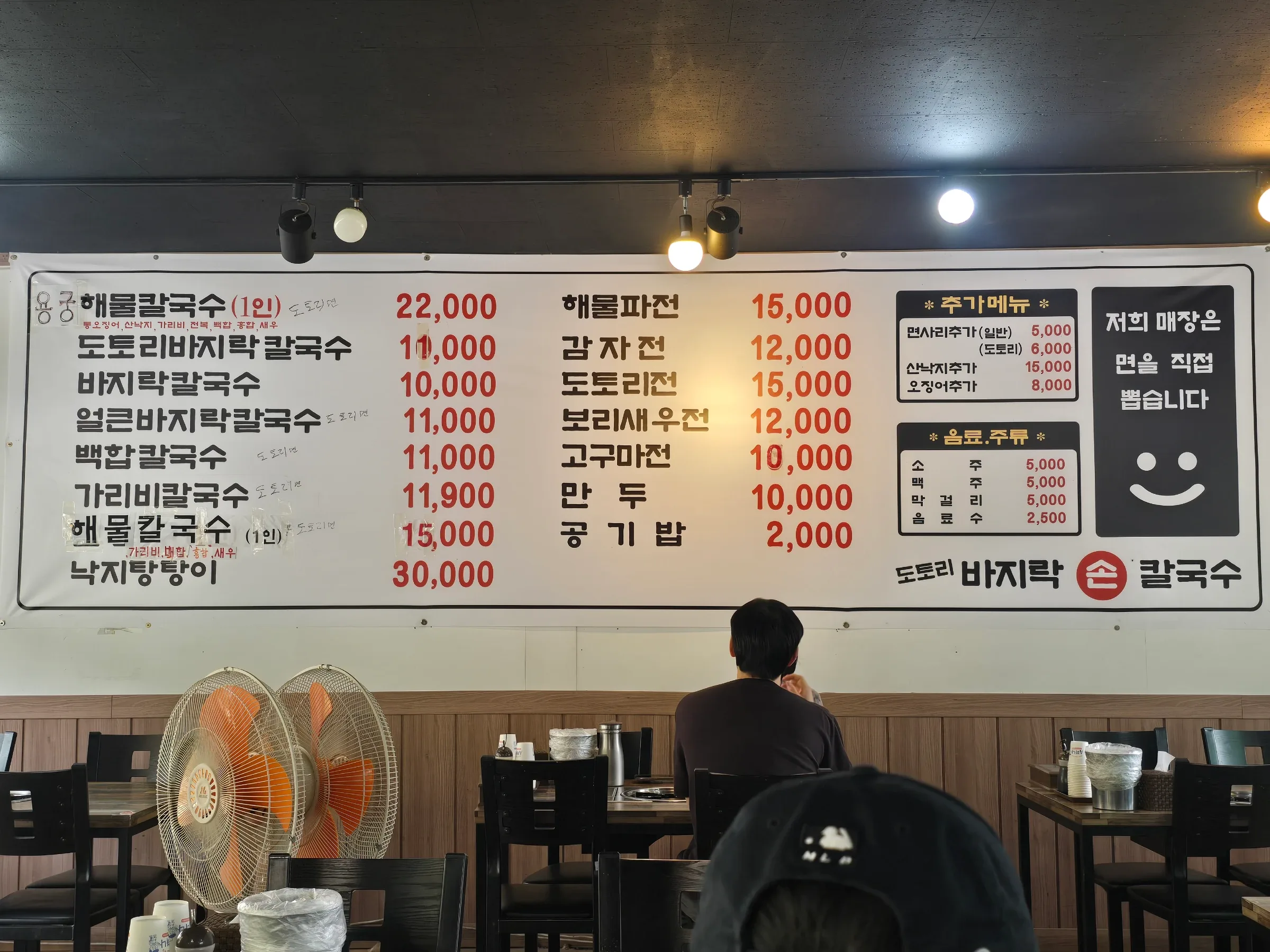
I would keep the full dish name handy rather than shorten it to seafood kalguksu. The wall menu also showed a separate Haemul Kalguksu at ₩15,000 per person. Beside the menu, a notice said the restaurant makes its noodles in-house.
The pot arrived packed with nakji, squid, abalone, and shellfish
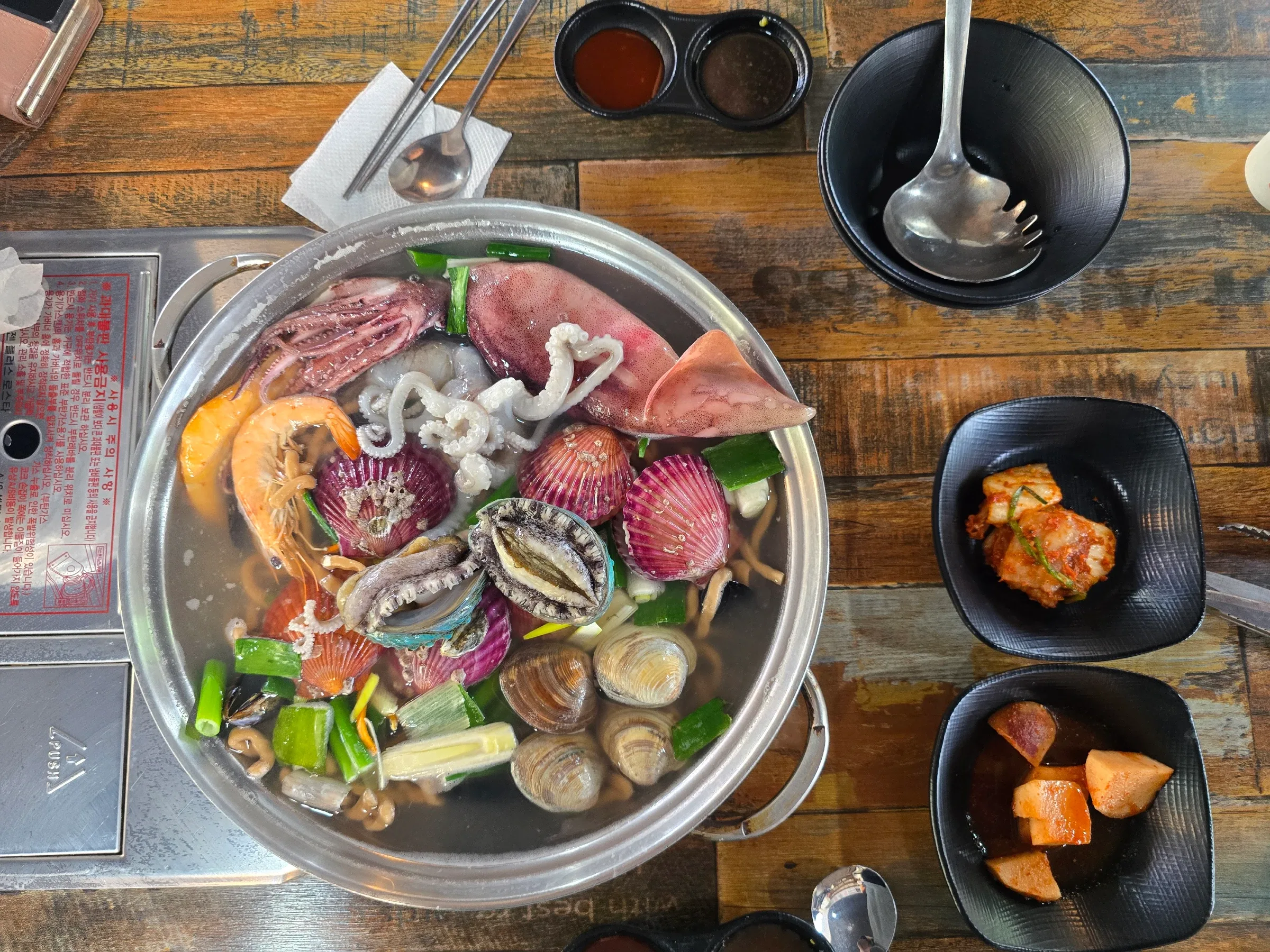
The generous seafood assortment was obvious before the broth began bubbling. Our pot contained nakji, a small long-arm octopus, along with squid, abalone, scallops, and other shellfish. Shrimp, clams, green onions, and vegetables were visible too.
At first, the broth was still enough to see the ingredients clearly. Large shells and clams crowded the edges, while abalone and shrimp overlapped near the center. This Ganghwa-do seafood kalguksu looked like a full seafood pot, not just noodles with a few toppings.
Acorn noodles held together while the boiling broth stayed light
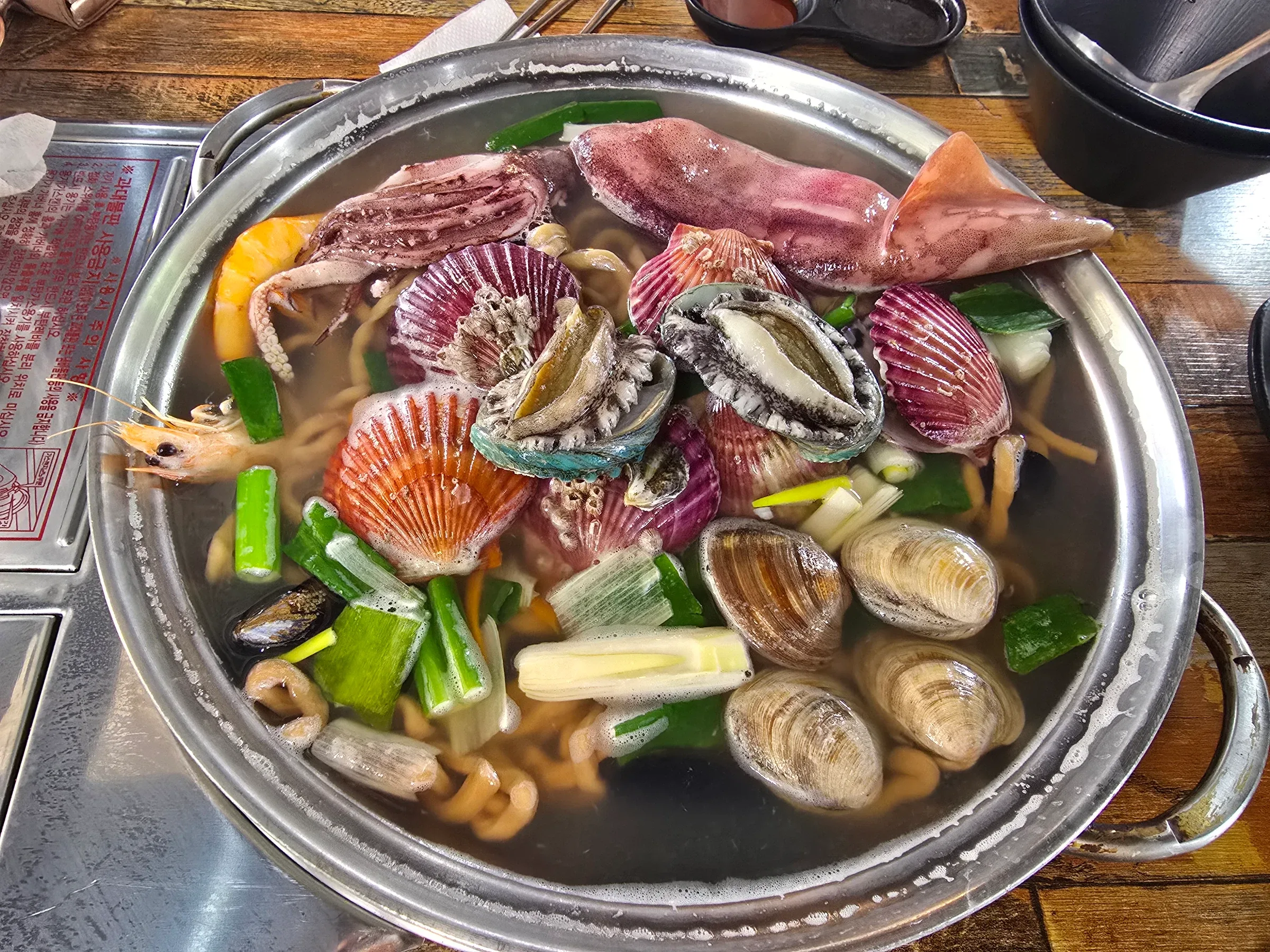
That packed pot kept its appeal as it boiled: the seafood was generous, but the broth still tasted light. When bubbling began, foam formed on the surface and the seafood shifted among the shells. The change was easy to see.
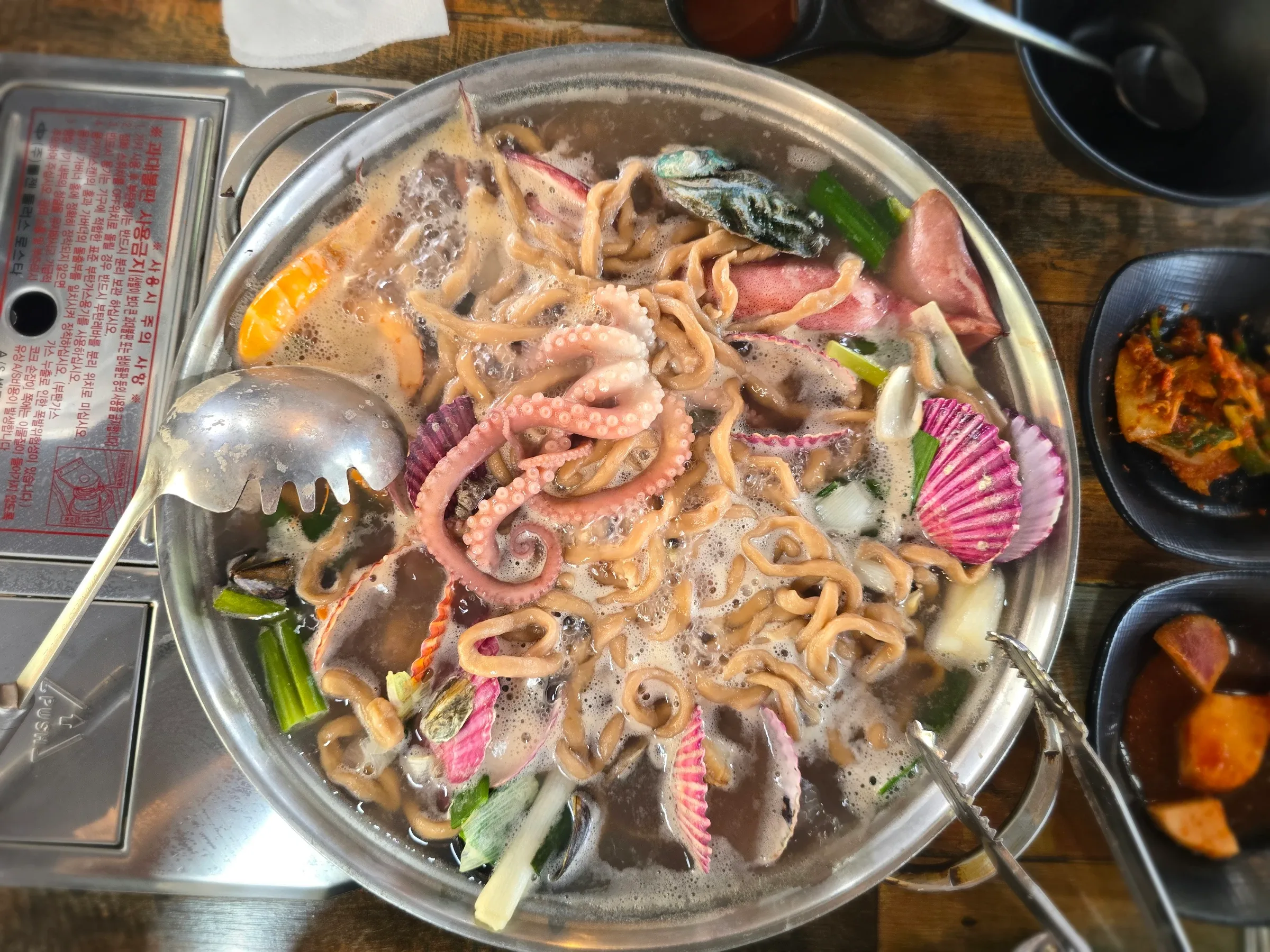
The more memorable change was the one that never happened. The noodles held together instead of breaking down into the broth. They kept their springy chew through the long boil, without turning the soup thick and porridge-like.
| Part of the dish | What stood out as we ate |
|---|---|
| Seafood | A generous assortment of nakji, squid, abalone, scallops, and other shellfish |
| Acorn noodles | Held together and stayed chewy through a long boil |
| Broth | Kept its light seafood taste without becoming thick from the noodles |
For me, that is the strongest reason to choose this acorn noodle kalguksu. The noodles kept their texture without taking over the seafood broth. The last part of the meal still had the balance I liked at the start.
My takeaway is a generous seafood pot with chewy acorn noodles and broth that stayed light through a long boil. Yongwang Haemul Kalguksu is listed at ₩22,000 and is available for orders of two or more.
Comments
No comments yet.