
Squid Game Games Explained: How the Real Playground Game Is Played
 AI-generated image
The Netflix series is named after a Korean children's game called Squid Game. It is played by an attacking team and a defending team. Attackers hop on one foot until they "promote." Season 1's final game re-creates that playground game, and Season 3 ends with a twist on it called Sky Squid. Below are how kids play it, why the show took the name, and which other Korean games it borrows.
Squid Game is a real playground game with an attacking team and a defending team
 AI-generated image
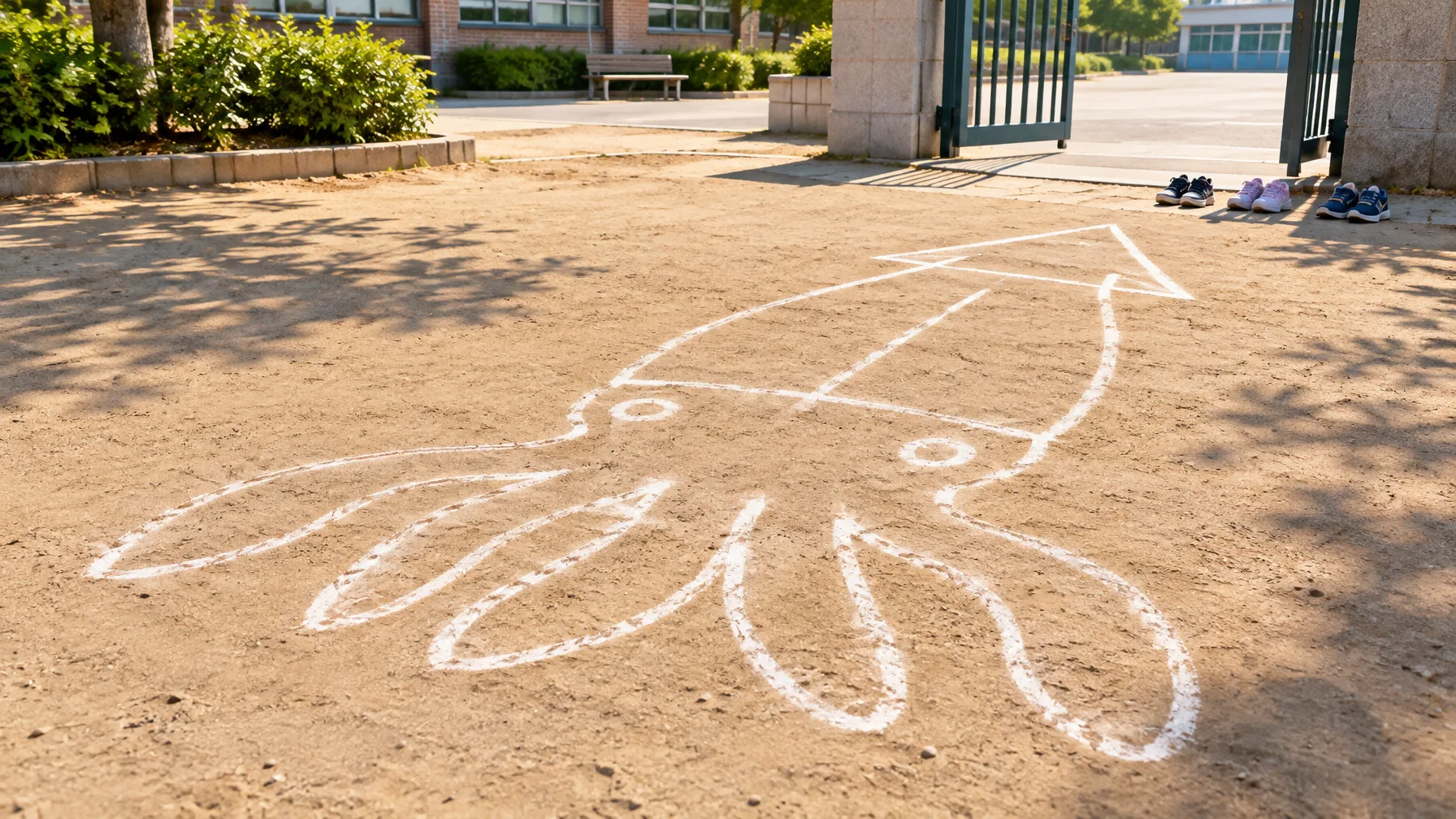
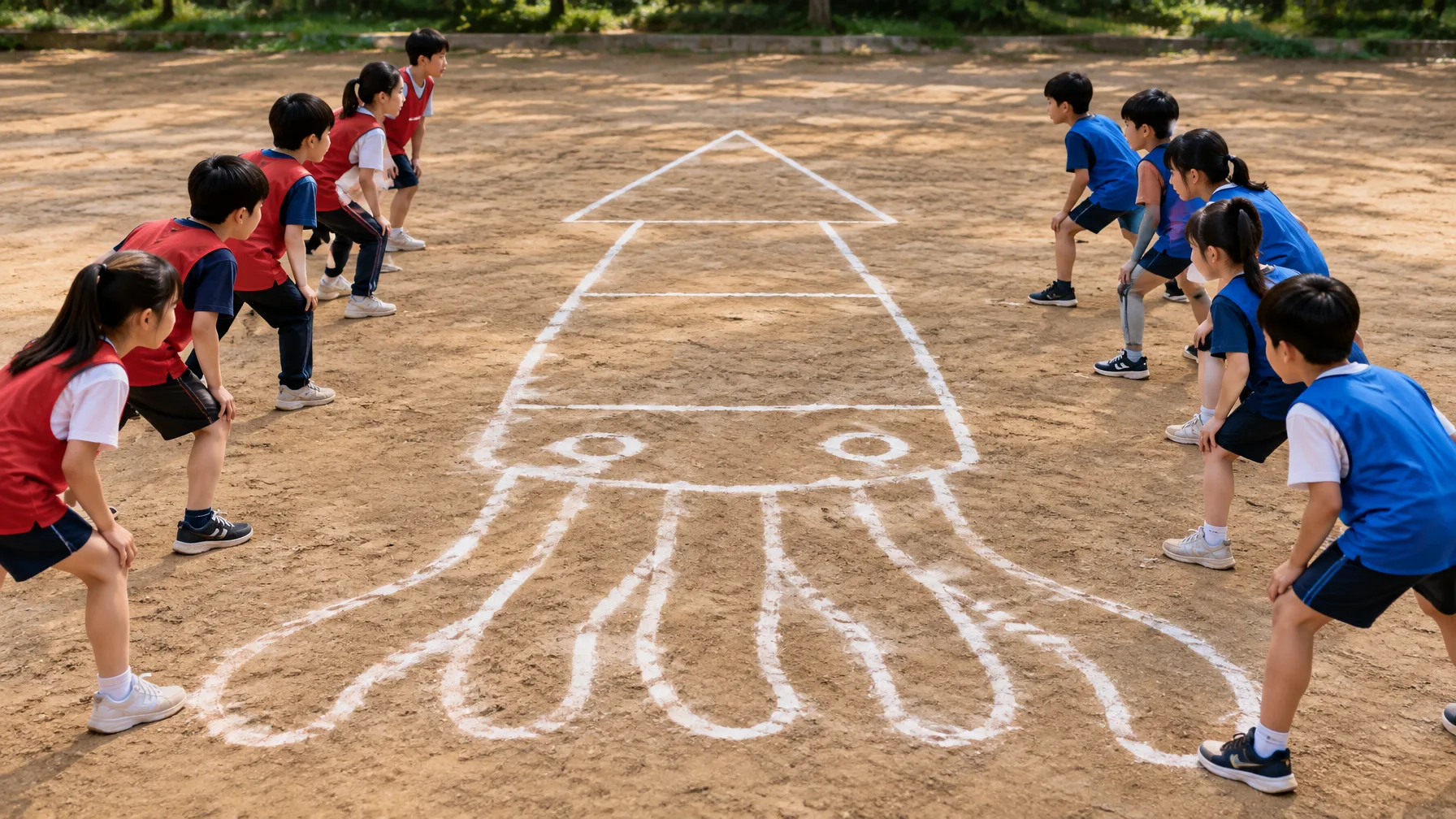
The name comes from the board. Kids draw the field on the ground, and its outline looks somewhat like a squid. Players then split into two sides: attackers and defenders.
Attackers win as a team. If just one of them gets through the defenders' territory (zone 3) and reaches zone 2, the whole attacking team wins. That's why attackers are willing to sacrifice a few players to get one runner through.
A 2009 script and a children's game gave the show its name
 AI-generated image
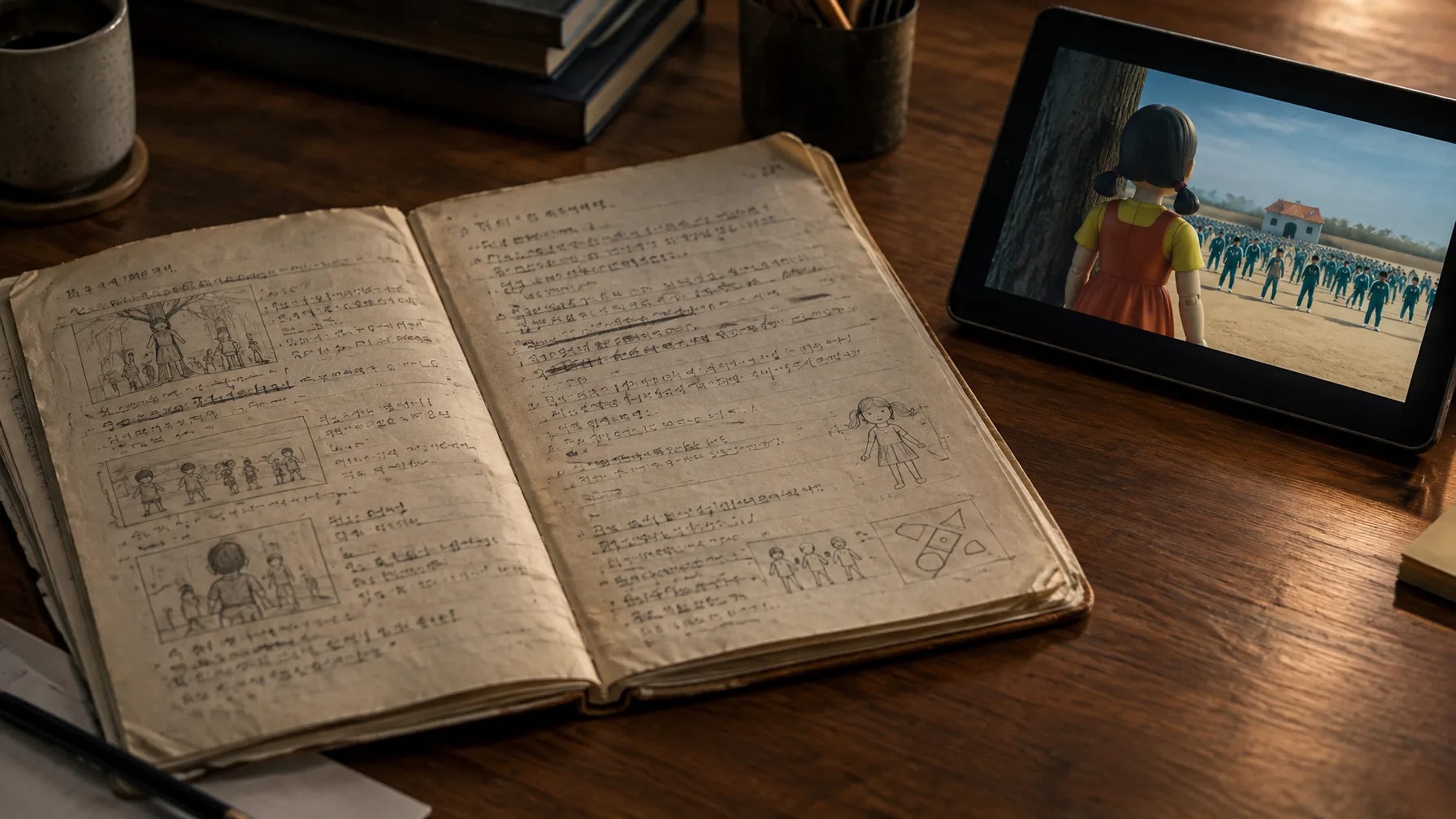
The title comes from the Korean children's game, whose name is ojingeo, the Korean word for squid. Director Hwang Dong-hyuk wrote the story in 2009, but he couldn't find a studio for it. Netflix showed interest around 2019.
The show sets kids' games against adult desperation. 456 players, each deep in financial trouble, bet their lives on children's games, and a loss means death. Each elimination puts another ₩100 million (US$87,400) into the prize pool. That clash between a schoolyard pastime and such high stakes is what hooks viewers. A simple chalk-drawn game delivers it well.
How attackers hop, how defenders block, and what gets you out
 AI-generated image
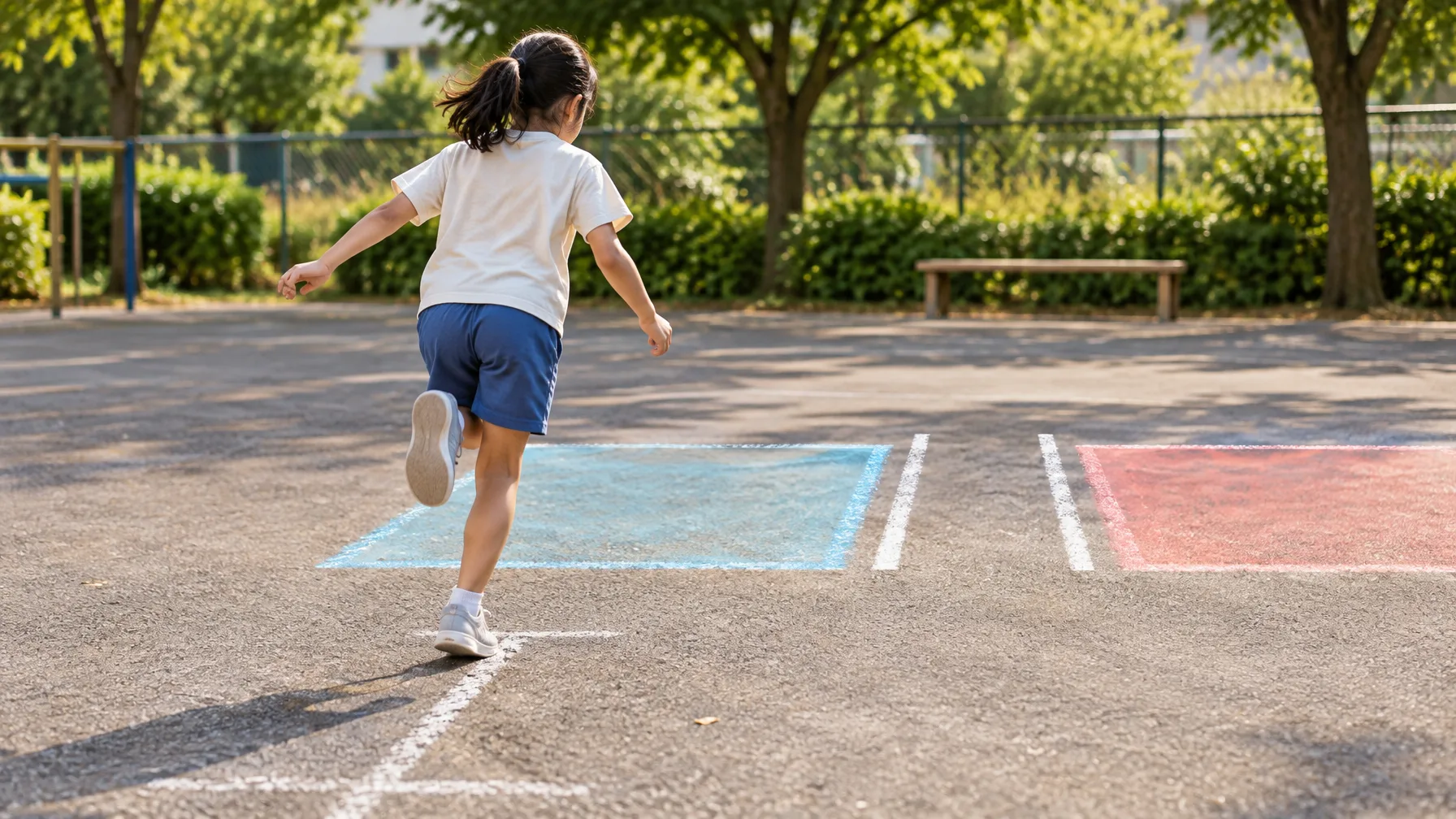
Movement is the core of the game, and it's lopsided. The playground rules work like this, step by step:
- Attackers may only hop on one foot at first.
- To "promote," an attacker hops across the narrow gap between the two promotion zones.
- Once promoted, an attacker can use both feet, inside and outside the squid.
- Defenders can't promote at all.
- Anyone who enters or leaves the squid anywhere other than the gate is out.
Elimination covers more than the gate rule. A player is also out if any part of the body touches the floor beyond the boundary line. Touching the boundary line itself counts too. In a real game, someone has to watch that line closely.
If you want to try it with kids, draw the gate clearly. Most arguments in a game like this start with a foot on a line, so a bold, wide line saves a lot of fuss.
Season by season: which games are on screen
| Season | Game | What happens |
|---|---|---|
| 1 | Final game | Re-creates the playground Squid Game |
| 2 | First game | Red Light, Green Light returns |
| 2 | Third game | Mingle: players form groups matching an announced number and enter a designated room |
| 3 | Ending | Sky Squid, a variant of the playground game |
Season 2 has six games, and the first and the third are covered here. The first is Red Light, Green Light, called Mugunghwa kkochi pieot seumnida in Korean. Gi-hun already knows the game from Season 1 and passes on tips. That takes some tension out of it, though the episode plays it differently from the first season. The third game is Mingle, in which players form groups matching an announced number and must enter a designated room.
The third game, Mingle, is built on a round-and-round nursery rhyme (the Korean title is Dunggeulge dunggeulge). A death game starting inside cheerful music and a lavish set is a deliberate irony. Season 2's gonggi scenes, meanwhile, use a hand double for the hand work.
Ddakji, gonggi and biseokchigi: the real versions, and their Iranian cousins
Several Korean playground games have close relatives in Iran, which shows how widely children's games travel. The table pairs each Korean game with how it's really played and its Iranian counterpart.
| Korean game | How it's played for real | Iranian counterpart |
|---|---|---|
| Ddakji (paper tile game) | Players throw their tile to flip an opponent's tile | Not covered here |
| Gonggi (stone-tossing game) | Five stones are tossed, then picked up one at a time in set moves | Ye ghol do ghol |
| Biseokchigi (stone-throwing game) | Throw a small stone from a set distance to topple a larger standing stone | Haft sang: seven stones set up, knocked down by another stone |
| Paengi chigi (spinning top) | Players spin the top with a string | Ferfereh, spun with a finger flick |
Ddakji has deep roots. People have played it since at least the Joseon era (1392–1897), and both North and South Korea still enjoy it. The simplest version is neomgyeomeokgi, played by at least two people with one tile each. Players decide the order with rock-paper-scissors, and the loser usually puts a tile on the floor. Everyone then takes turns throwing, usually hard, to flip the opponent's tile.
House rules vary. Some groups set a boundary and knock out any tile that leaves it. Others eliminate the upper tile when a thrown tile lands under another. Mireonaegi is a related style played inside a boundary. Each player starts with one tile in hand and at least one inside the boundary. Pushing an opponent's tile out of bounds wins it.
Ye ghol do ghol is the Iranian gonggi. Players follow fixed moves. Examples include catching a stone on the back of the hand or moving every stone to the palm at once. Biseokchigi and haft sang are close in spirit: stones are thrown at other stones.
The show's rules are a dramatized version, not the playground rules
The biggest mistake is treating what you see on screen as how kids actually play. The show's version adds a clause that makes a player the winner if the opponent dies, which the real game doesn't have. In the series, players could also ignore the rules and kill each other. So what happens in the arena tells you very little about the original game.
A second mistake is assuming every game in the series maps neatly to a playground game. Keep the real rules and the dramatized rules in separate boxes.
Next steps: compare the show with the real rules
If you plan a rewatch, episodes run between 33 and 76 minutes, so one sitting can take a while. Read the playground rules above first, then watch Season 1's final game and spot where the show departs from them. Try ddakji with a few friends and some folded paper afterward, since neomgyeomeokgi needs nothing else.
Squid Game is a real Korean playground game, and the series takes its name from it. Season 1's final game re-creates it, and Season 3 closes with a twist called Sky Squid. The show's rules are a dramatized version, so don't mistake them for how kids actually play.
Comments
No comments yet.