
Korean Hairstyle Girl for School: What Is Allowed Today
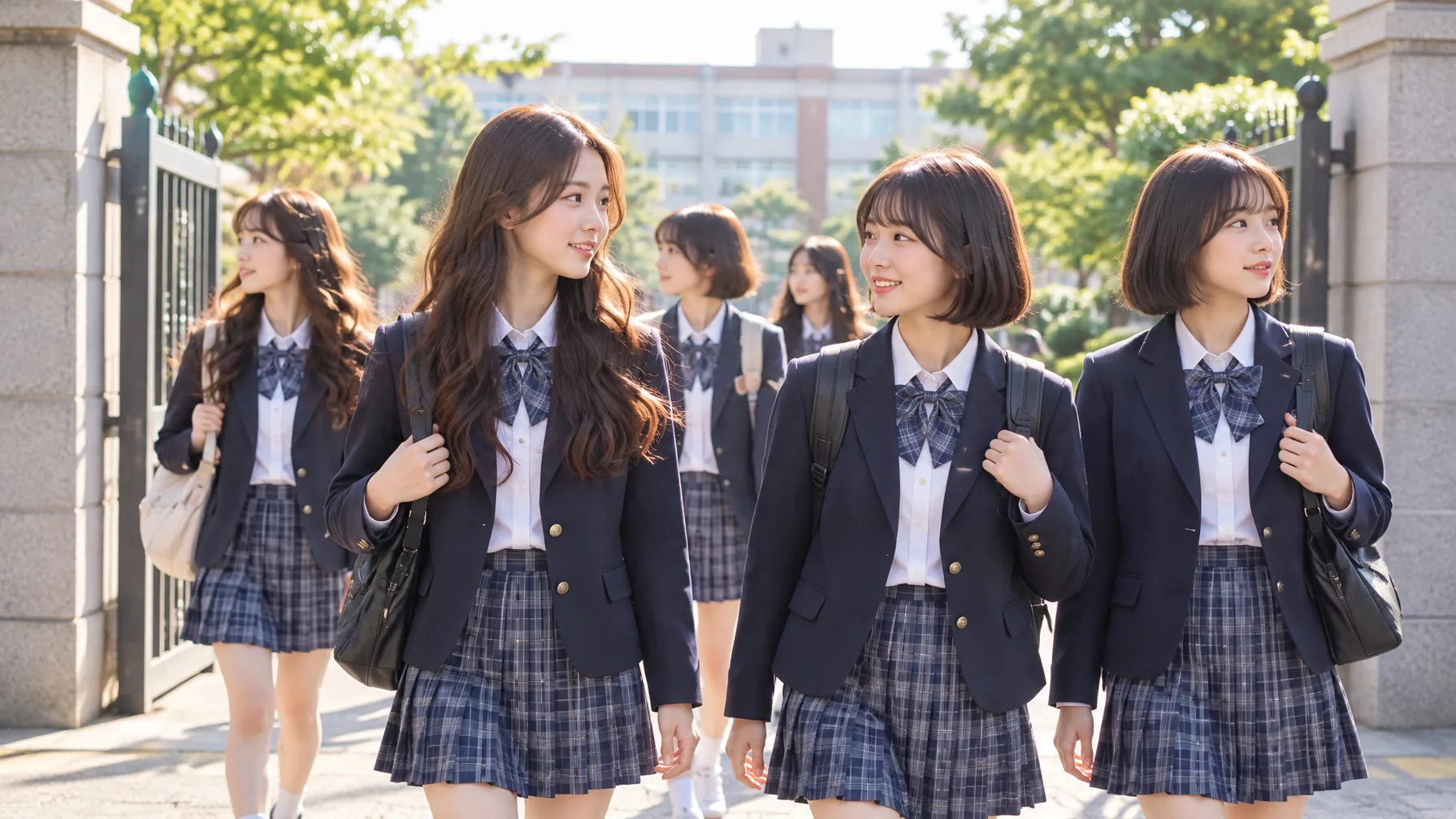 AI-generated image
Korean girls' school hair used to be capped at short cuts no longer than 3 cm (about 1.2 inches) below the ears. Today many students can dye, perm and wear their hair down. Some conservative schools still follow the older rules, though. This post is the short version of Korean school hair rules for girls: what is allowed, what is banned and how the rules have changed. It walks through how things got here and where the limits still are, so a first-time reader doesn't assume every school works the same way.
Short bobs were the rule; dyed, permed and loose hair is common now
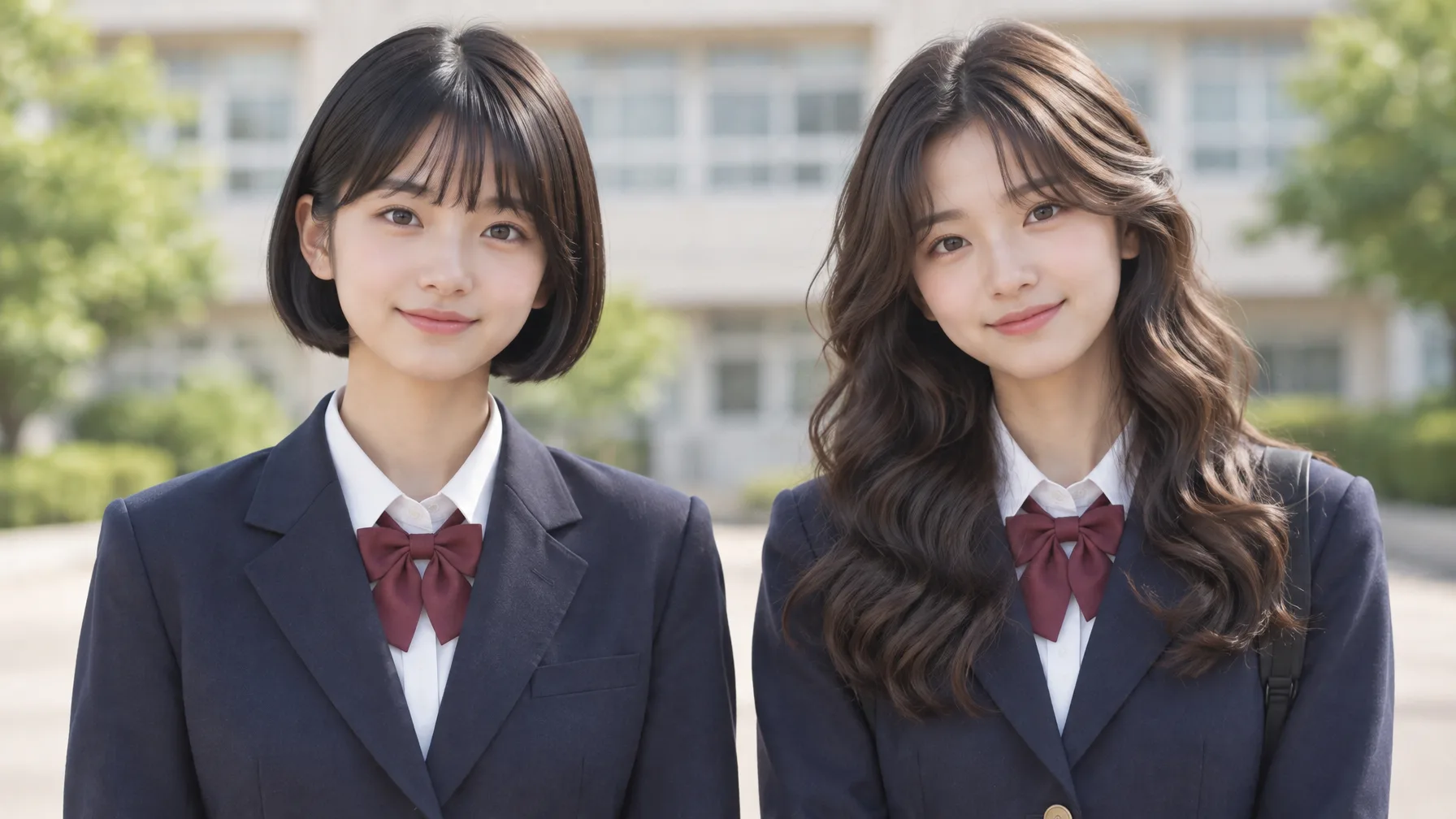 AI-generated image
There are three steps. First came a strict short-hair rule for every girl. Then came a loosening, driven by student rights ordinances. Today the picture depends on the school. The table below puts the three steps side by side, and the sections after it fill in the details.
| Stage | What girls could do with their hair | What to keep in mind |
|---|---|---|
| The old rule | Short hair only, with a length limit measured from the ears | Every girl followed the same cut |
| After the student rights ordinances | Hair freedom was written into ordinances by several city and provincial education offices | Uniform freedom came in the same ordinances. Makeup and nail polish had generally been banned before |
| Today | Many students dye, perm and wear their hair down | Rules differ by school, and conservative or single-sex schools can be stricter |
Every girl had to keep her hair short
 AI-generated image
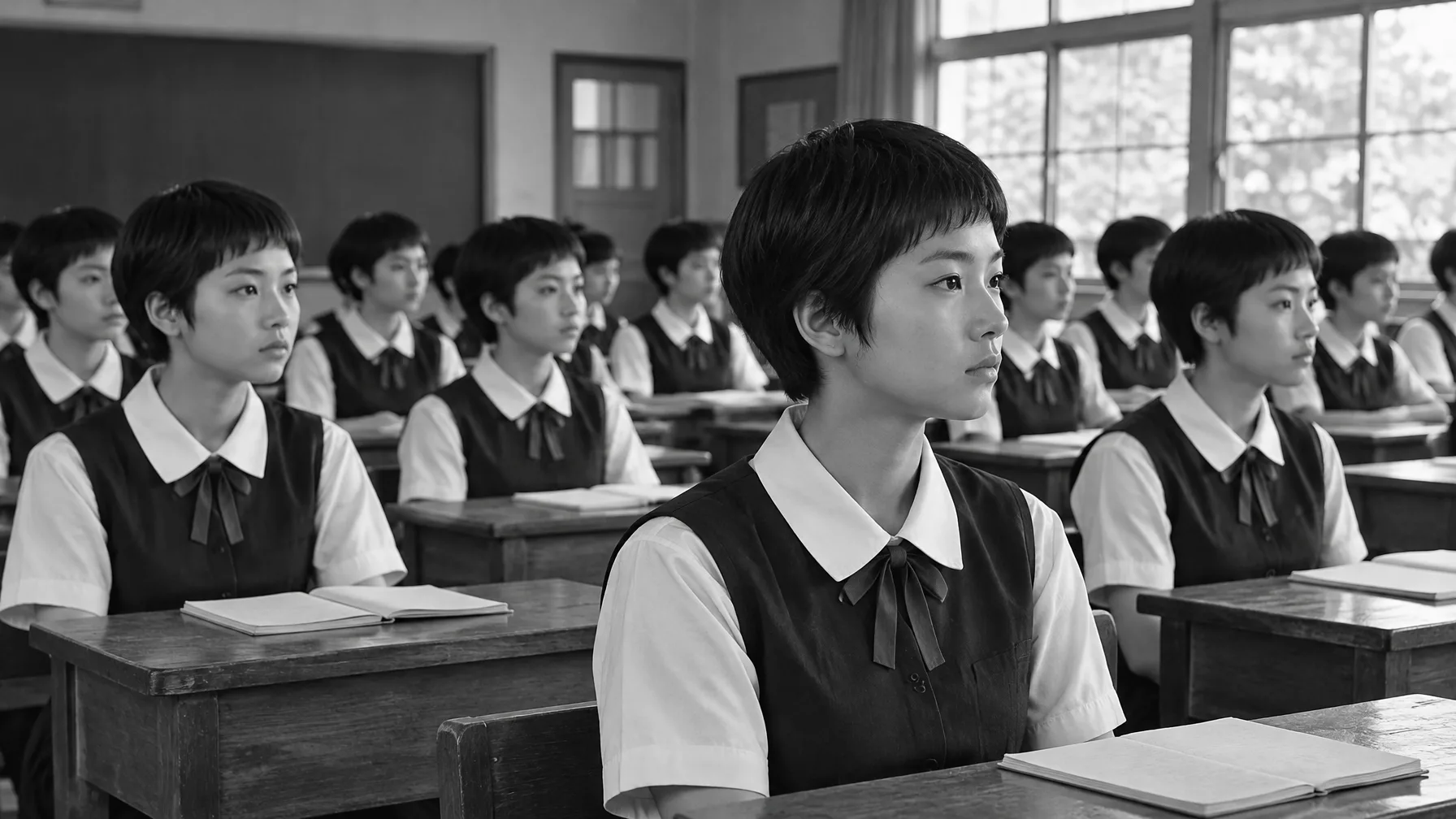
In the older system there was no choice to make. All schoolgirls had to wear short hair, and the limit was measured from the ears. Longer than that, and the hair broke the rule.
Hair was not the only thing under control. Makeup and nail polish were generally banned too. So the hair rule sat inside a wider dress code that treated a student's appearance as the school's business. That is why the change to hair feels like such a big shift to people who grew up with the old way.
Student rights ordinances opened the door
 AI-generated image
The loosening came from policy rather than from a single school's decision. Several city and provincial education offices passed student rights ordinances. Those ordinances included freedom over hair and freedom over uniforms. Once that was in place, the old blanket limits had far less force.
Students pushed in the same direction. Hair freedom is something Korean students themselves ask for, because a free hairstyle lets them express themselves. It is still an open debate, so the change has not settled into one national answer. Treat the loosening as real but still moving.
Girls can dye, perm and wear their hair down
In many Korean schools today, a wide range of hairstyles is allowed. Girls can dye their hair, perm it and leave it down instead of tying it back. For anyone who pictures Korean school as nothing but identical short cuts, that is the biggest update.
Perms are a good example of how far things have moved. Korean Perm Short Hair Female: Get the C-Curl Bob Look shows what it involves. Whether a given school lets a student wear it is still a school-by-school question, which the next sections cover.
Not every school is this relaxed
The most common mistake is to read "many schools allow it" as "all schools allow it." Hairstyle rules vary from school to school. Some conservative schools still follow the traditional style of rules. Single-sex schools, meaning boys' schools and girls' schools, can be especially strict.
A list of allowed and banned styles only works for one school at a time. A girl moving between schools, or a parent comparing two of them, should expect different answers for the same haircut. Uniform habits differ by school level too. Coed elementary schools mostly skip uniforms. Separate-sex middle and high schools wear them, so appearance rules are not the same across grades either.
Naturally brown or curly hair can still cause trouble
The loosening does not help everyone equally. At some schools, a student with naturally brown or light brown hair, or naturally curly hair, still has to change it. The student must straighten it or dye it black to follow the rules. It is a strange result: a student can be asked to change hair that was never styled at all.
If you or your child has hair like this, it is worth finding out how a particular school handles it before the first day. Do not assume the new, relaxed rules apply.
Hair gets checked at the school gate
Hair is usually checked along with the uniform at the school gate. The check covers whether the hairstyle fits the school's rules. The rules themselves come from each school, so lengths and color limits are not the same everywhere.
Checks can be occasional rather than a daily routine, and students do not always follow the rules to the letter. What is written in the rulebook and what you see after school can look quite different. A single rule says little about a school.
Short cuts then, freedom now, and school rules still decide
Girls once had to keep hair short, no more than 3 cm below the ears. Today the rules have loosened at many schools. Rules still differ by school, and strict ones, especially single-sex schools, may still enforce older limits. If a school's hair rule matters to you, look at that school's own rulebook before you plan a haircut.
Comments
No comments yet.