
Getting Around
T-money Card in Seoul: How to Buy, Top Up, and Use It
A T-money card is a reloadable transit payment card for subway and bus rides. Buy one at a convenience store or a subway station, then add balance at either location.
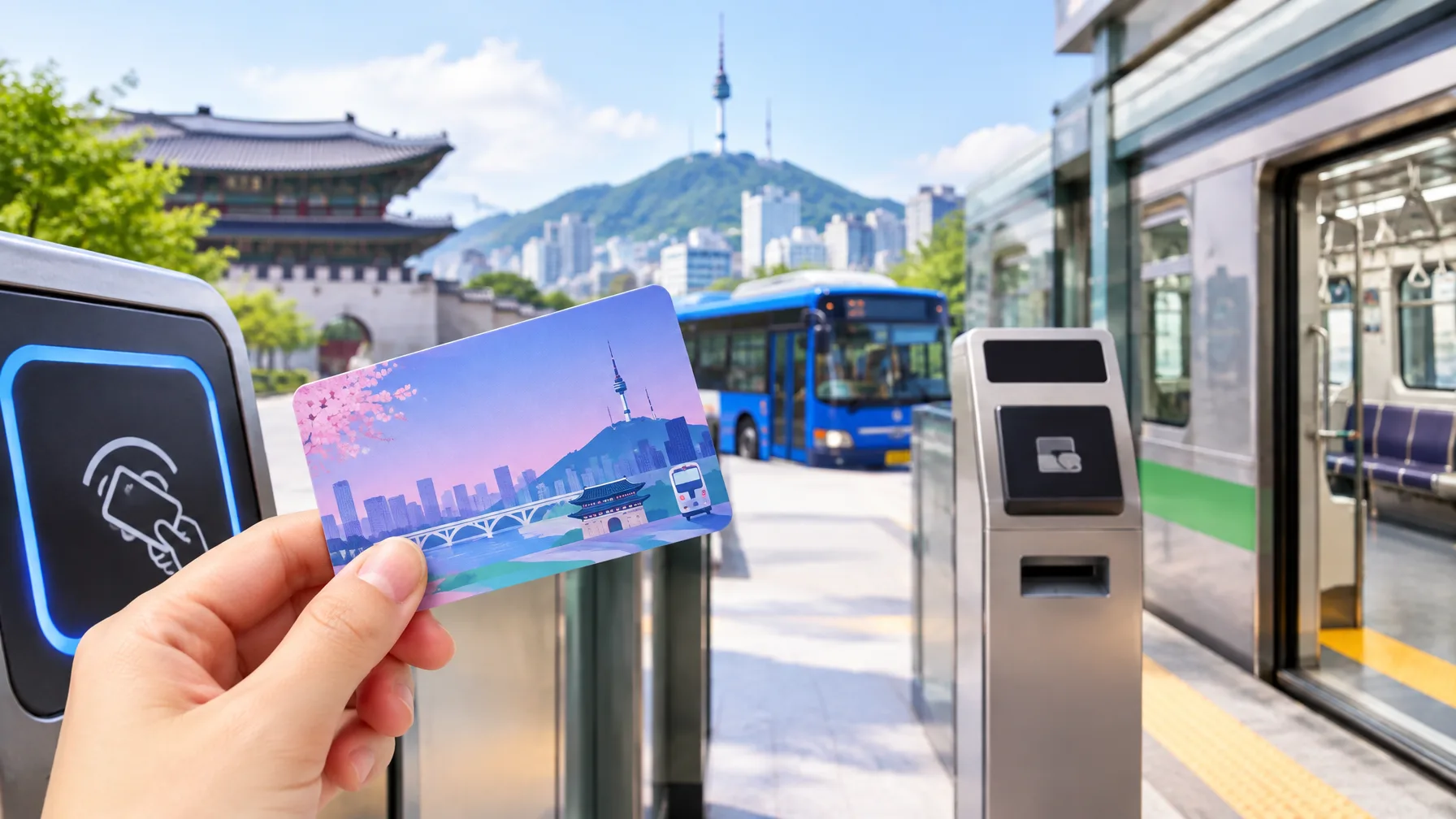
The quick answer
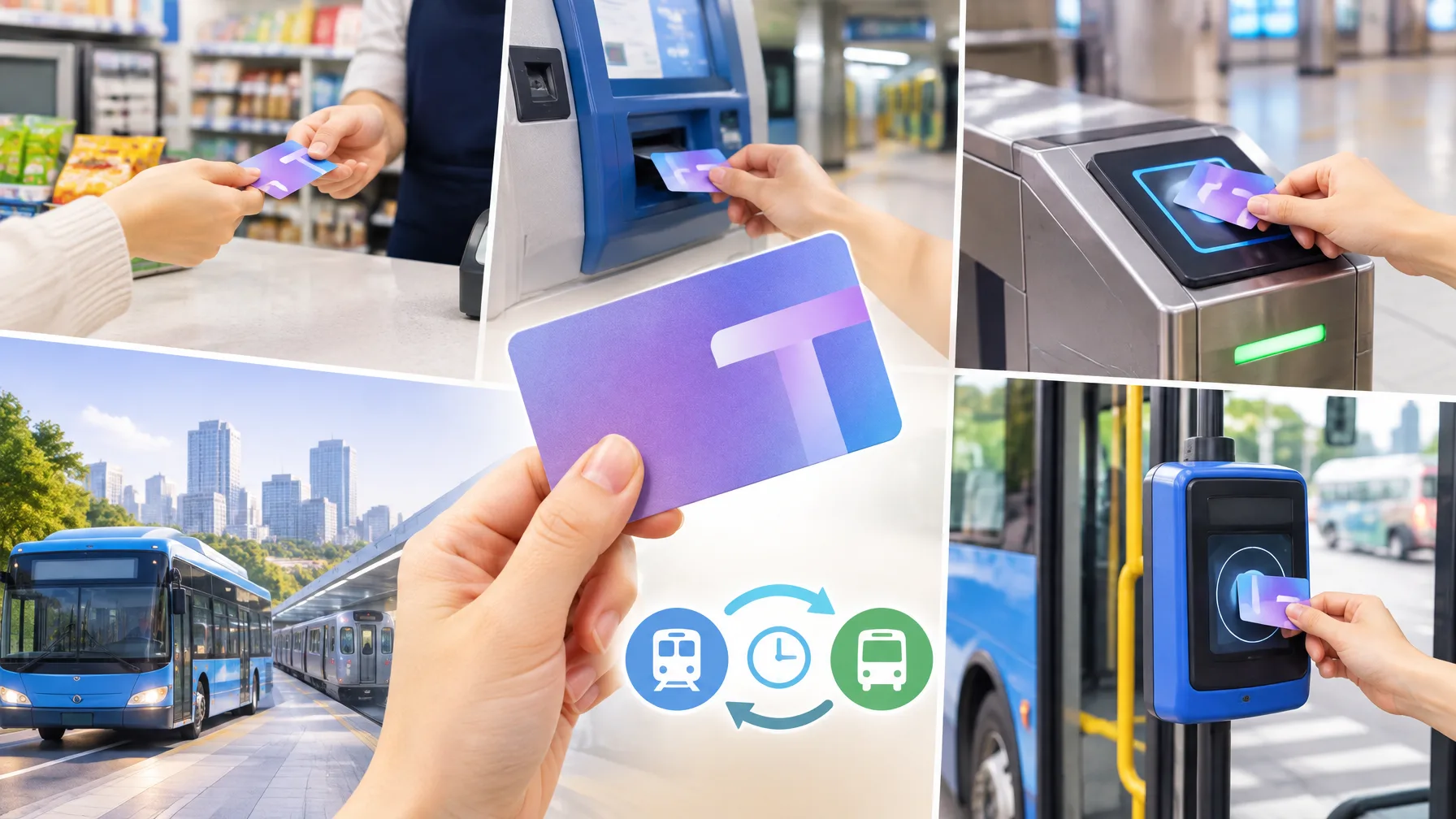
A T-money card is a reloadable transit payment card for subway and bus rides. Buy one at a convenience store or a subway station, then add balance at either location. Tap when you enter and exit the subway, and when you board and get off a bus.
For subway and bus transfers within 30 minutes, the next leg may be free or discounted. Keep that window in mind when planning a connection.
Before you buy: price and payment
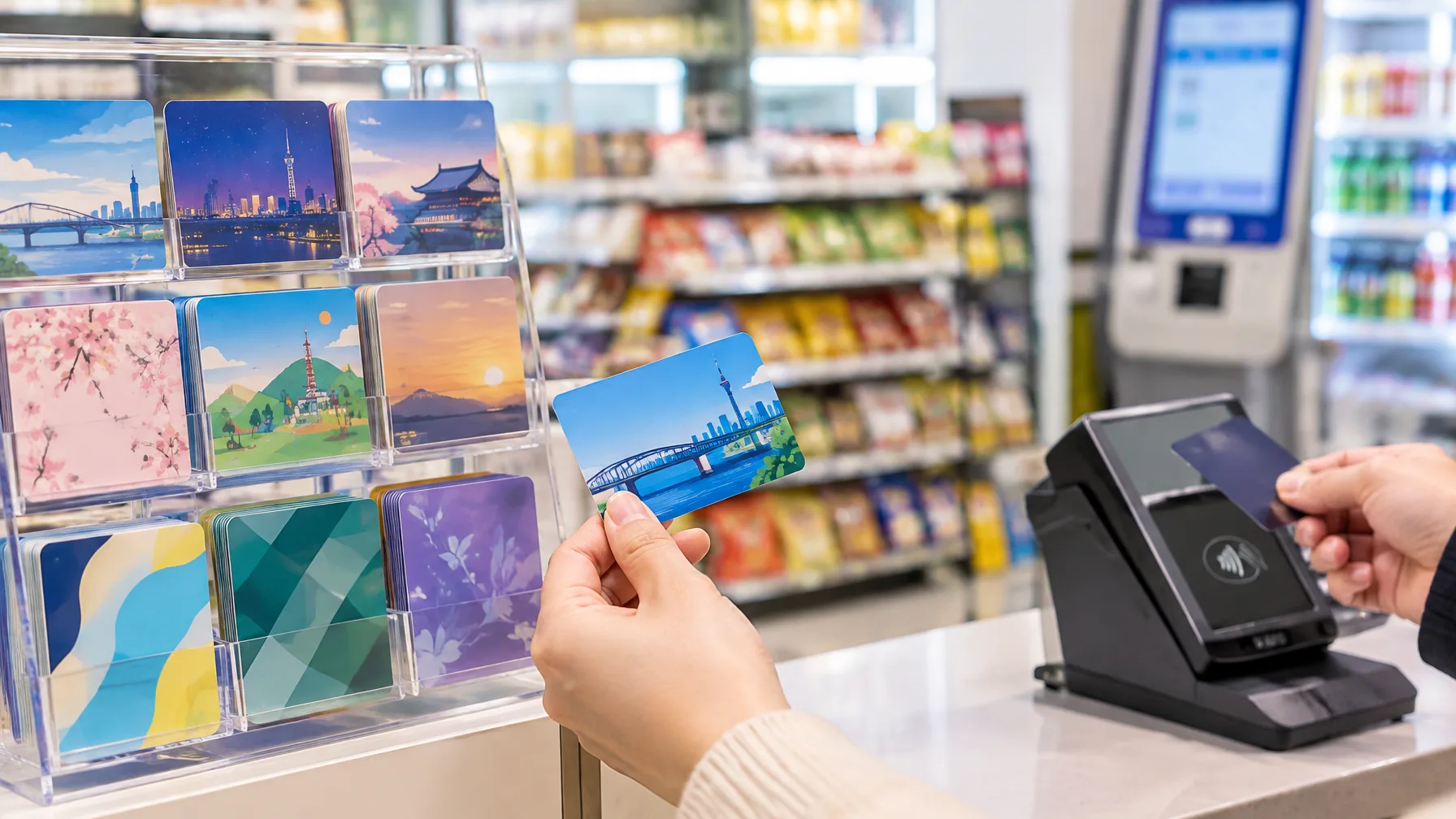
At convenience stores, cards usually cost 2,500–5,000 KRW, depending on the design. KRW means South Korean won. Check the displayed price before choosing your card.
Plan to buy the card and add travel balance as separate steps. Before paying, ask which payment methods the store or machine accepts for each step. Do not assume your US credit card will work for both.
You do not need to read Korean to use the station's ticket machines. They offer English, Chinese, and Japanese options.
Your first T-money card trip, step by step
Step 1: Buy your card. Ask for T-money at a convenience store, or look for card-purchase facilities at a subway station. This gives you a Seoul transit card you can use on both subways and buses.
Step 2: Add balance before riding. For a T-money top-up, use a convenience store or subway station. At a store, ask the cashier to reload it. At a station, select English and follow the reload prompts.
Step 3: Tap in and out on the Seoul subway. Touch your card to the reader at the entrance gate. Keep it handy, because you must tap again at the exit gate.
Step 4: Tap when boarding and leaving Seoul buses. Touch the card to the reader when you get on. Before getting off, tap it again at the exit reader.
Step 5: Keep transfers within 30 minutes when possible. A connection between subway and bus within that window may make the next leg free or discounted. Still tap out of the first ride and into the next one.
Common first-ride mistakes
Do not put the card away after boarding. The exit tap is required on both subway and bus trips, even if this is your final ride.
If your balance is low, reload at a convenience store or subway station. Ask about the balance when topping up so you can plan your next ride.
What not to assume
A transfer is not a promise of a free ride. The next leg may be free or discounted within the 30-minute window. For a longer gap, check current transfer rules on official transit notices rather than expecting the same benefit.
The usual convenience-store price is a guide, not a fixed price for every card. Check the price tag, accepted payment methods, and reload instructions where you buy it.
For your first trip, keep the sequence simple: buy, top up, tap in, and tap out. If you connect between subway and bus, keep the 30-minute transfer window in mind.
Sources
- How to Buy and Use a T-Money Card - Seoul Explorer — seoulexplorer.comChecked Oct 1, 2026
- K-Royal Palaces PASS Exchange Ticket (T-money Card) ... — www.ktriptips.comChecked Oct 1, 2026
- How to use the T-money card? Get to know it before ... — www.trip.comChecked Oct 1, 2026
- South Korea KT SIM Card | 4G Network | Korean Phone ... — ae.trip.comChecked Oct 1, 2026
Comments
No comments yet.